



By J. H. Irwin
Author | Storyteller | Capturing Life, Memory, and Meaning
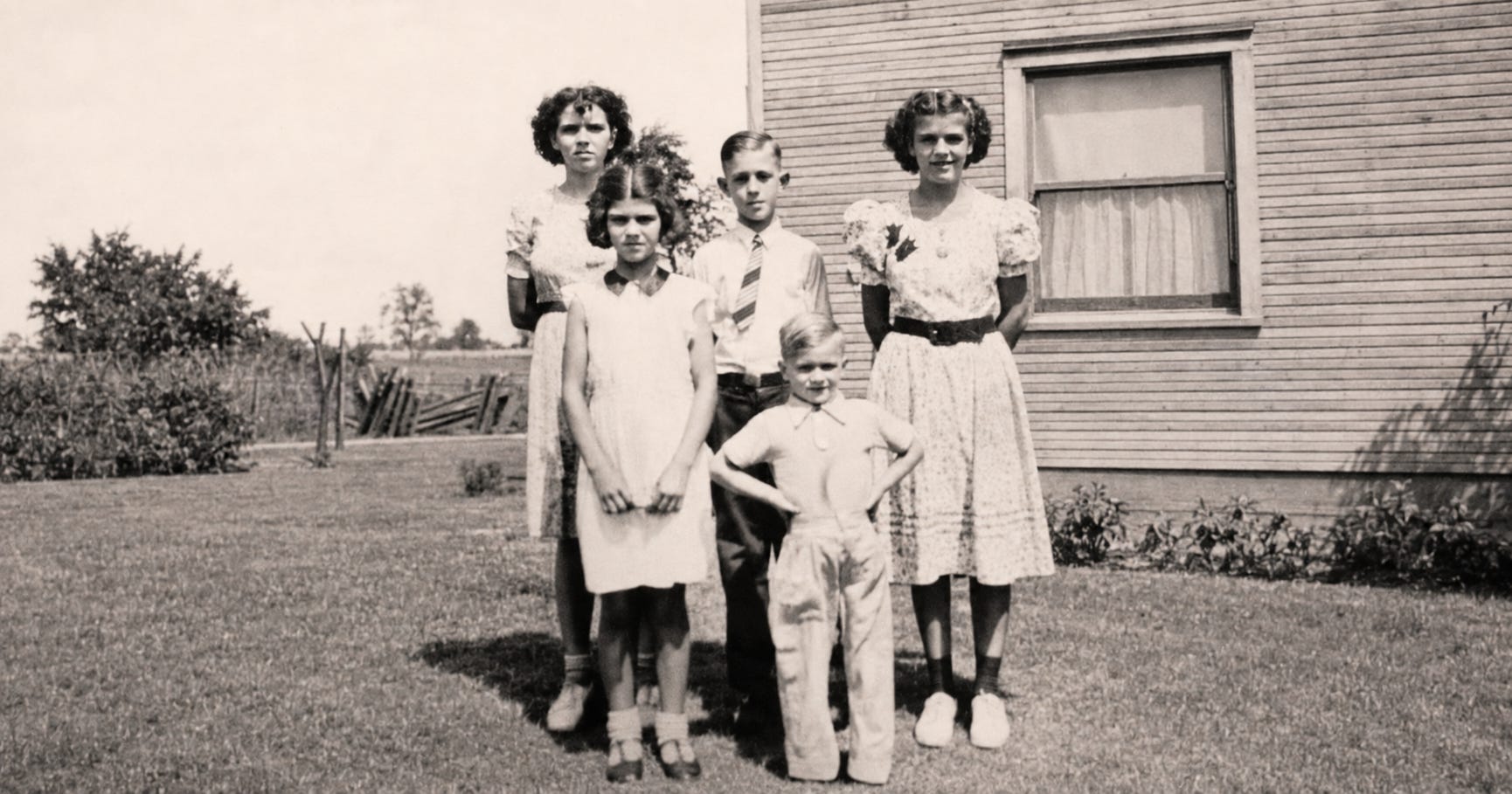
The photograph accompanying this article is an old family picture of my mom and her brothers and sisters when they were very young.
They grew up in Depression-era America, when life was difficult and money was scarce. Their clothes were worn, their meals were modest, and even something as ordinary as having a family photograph taken could become a painful reminder of all they could not afford.
As human beings, we often romanticize the past as a “simpler time.” We imagine quieter days, less frantic lives, closer communities, and a world that was not driven by a relentless stream of bad news. We compare that imagined past with the frantic fury and unprecedented geopolitical upheaval of today, and it is easy to believe that people must have been happier then. But were those times really simpler? Was life easier, or have the passing years softened the hardship and left us with only the most comforting parts of the story?
The truth, I think, is that those days were certainly different, but they were not simple. This photograph was taken during the Great Depression era, a period that brought poverty, hunger, uncertainty, and fear into millions of American homes. It did not make life simpler. It made survival harder.
Both of my parents have been gone for many years. Dad was born in 1923 and passed away in 2001 at the age of 78. Mom was born in 1925 and passed away in 2013 at the age of 88. While they were alive, they often shared stories from their childhoods. Two of those stories have never left me.
Mom once told me about a traveling photographer who went from house to house taking pictures of families, promising to capture precious memories they could hold onto well into the future. Back then, you could not simply take dozens of pictures with a phone or run to CVS to have your film developed. The photographer had to develop the images himself, the old-fashioned way, and the process took weeks.
When he returned and presented the finished photographs to Mom’s parents, they simply did not have the money to pay for them. Instead of showing compassion or allowing them to keep even one, the photographer tore the pictures apart in front of the family and walked away. Can you imagine what that must have felt like? These were not merely pieces of paper. They were family memories destroyed because poverty had made them unaffordable.
Another story was about food. They were so poor that many of their meals consisted of milk toast. If they were fortunate on any given day, they had a small amount of sugar to sprinkle on top. From a distance, a meal like that might sound quaint or nostalgic, but there was nothing quaint about having so little choice.
Their clothes were old and often dirty. Yet despite everything they endured, they found happiness and formed a family bond that lasted until the last of them was gone. Their happiness does not mean the hardship was harmless. It means they found love, comfort, and belonging within it.
As adults, the five siblings remained about as close as any family I have ever seen. They spent holidays together and visited often, sometimes dropping in at one another’s homes unexpectedly. Everyone was always thrilled to see one another. Unlike today, when an unplanned visit can be treated as an intrusion, this was a family in which unexpected visitors were welcomed and celebrated.
Perhaps that closeness is what we are really longing for when we talk about a simpler time. We are not longing for poverty, hunger, limited choices, or the inability to afford a family photograph. We are longing for open doors, shared meals, stronger bonds, and the feeling that the people in our lives have time for us. We should not confuse fewer possessions with fewer burdens, but neither should we dismiss the human connection that helped people survive those burdens.
There is no question that in 2026 we are living through a deeply unsettling period. In our lifetimes, we have rarely had to consider so seriously whether American democracy itself could be lost. We are surrounded by political instability, geopolitical upheaval, economic anxiety, accelerating technology, social division, and a constant flood of information demanding our attention. But the past was not free of fear. Its fears were simply different.
So, when we begin reminiscing about how good life must have been in the “good old days,” we should remember the whole picture. We should see the worn clothes, the milk toast, and the photographs torn apart because a family could not afford them. But we should also see the closeness, the resilience, and the love that held this family together throughout their lives.
The past was not simpler, and the people in this photograph did not live carefree lives. Perhaps they simply understood more clearly that when so much can be taken from you, the people you love matter most.