


By J. H. Irwin
Author | Storyteller | Exploring the Human Experience Through Words
As I approach my 65th year, I find myself more aware than ever of life’s delicate and inevitable transitions. I lost my father nearly 25 years ago, my mother 13 years ago, and my oldest sister Judy over 17 years ago. I am the youngest of five children, born late in my parents’ lives with a seventeen-year gap between Judy and me. Though Judy is gone, I am grateful to still have my other siblings: Nancy, who is 15 years older than I am; Tom, who is 5 years older; and Peggy, just 4 years older. In addition, I have nieces and nephews who now have children of their own. Their presence is a continuing thread in the tapestry of my life.
My grandparents, those who were alive when I was born, passed before I turned six, and all of my aunts and uncles from both sides have been gone for many years. In many ways, I’ve lived much of my life in the echoes of those who came before me, learning not through their words, but through their absence.
This article is born from a season of reflection, deepened by recent losses and the quiet understanding that more loss will come. I write this not from a place of sorrow, but from a place of reverence, for the journey we all must take through life’s seasons, for the wisdom we earn through grief, and for the resilience we somehow summon to keep moving forward. This is my attempt to honor the beauty and pain of the human experience, and to offer a sense of connection, comfort, and hope to those walking through their own seasons of endings and beginnings.
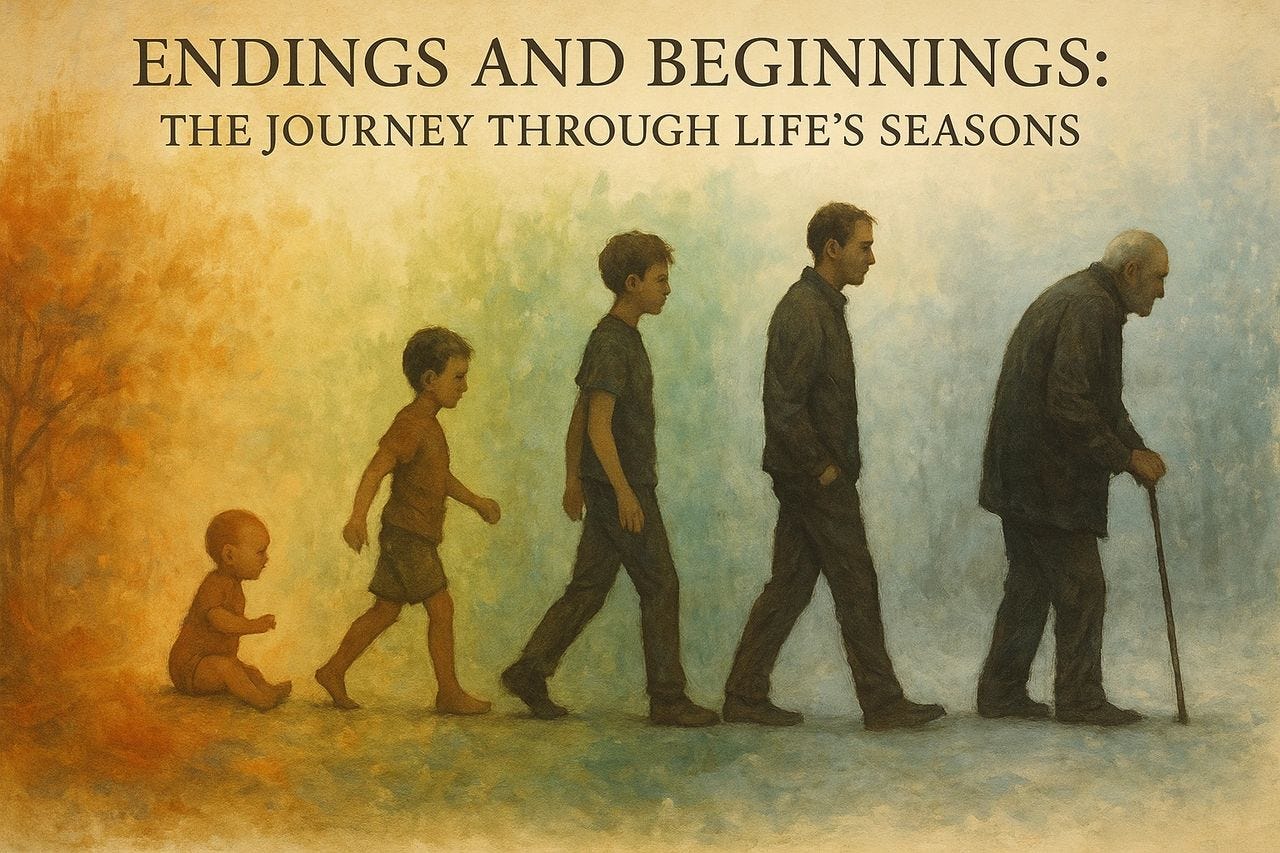
Life moves in circles, a profound series of beginnings and endings intricately woven through the tapestry of our existence. Within these cycles, we experience distinct stages; childhood, adolescence, adulthood, mid-life, and our senior years, each carrying its unique milestones, challenges, and transformations. As we navigate these stages, our identities evolve, shaped significantly by our relationships, experiences, and losses.
In childhood, we form our foundational attachments, developing trust and understanding of the world around us. Adolescence brings forth the formation of identity and a quest for independence, setting the groundwork for our adult years. Adulthood deepens our relationships and responsibilities, creating bonds and commitments that anchor our lives. Mid-life often prompts us to reevaluate our life’s direction and purpose, as we seek meaning beyond daily responsibilities. Finally, our senior years invite reflection, legacy-building, and ongoing personal growth, even amid physical or cognitive challenges. Aging, though often feared, can be embraced as a period rich with wisdom, self-understanding, and continued productivity. Staying engaged through lifelong learning, volunteering, mentoring, and pursuing passions ensures our later years remain meaningful and fulfilling.
Yet, alongside these developmental stages, we inevitably encounter profound losses, milestone events such as the death of a parent, sibling, spouse, or tragically, a child. Each of these losses profoundly affects our identity, relationships, and perceptions of life’s meaning.
When we lose a parent, we feel orphaned, regardless of age. A foundational part of our identity shifts irrevocably, transforming our role from cared-for to caregiver, and eventually to keeper of family memory and legacy. This transition encourages deeper reflection, renewing our focus on family, health, and life’s broader purpose.
The loss of a sibling evokes a uniquely intimate grief, disrupting familial continuity. Siblings share formative experiences, and their absence creates a void in our life’s narrative. This profound loss prompts deep introspection, often reshaping our understanding of family dynamics and our individual identity.
The death of a spouse or partner carries emotional gravity that profoundly reshapes daily life, homes, and future dreams. Navigating solitude, the surviving partner must redefine their identity and life’s purpose. Although painful, this grief can foster personal growth, renewal, and eventually lead to discovering new ways to live meaningfully.
Perhaps the most devastating loss is the death of a child, reversing life’s natural order and leaving parents profoundly disoriented. Such grief carries deep emotional complexity, often involving guilt, intense sorrow, and a lasting sense of loss. Healing from this profound grief involves recognizing and honoring the enduring love for the lost child. Parents may channel their grief into advocacy or connect with others experiencing similar loss, transforming pain into purposeful communal healing.
Throughout all these stages and losses, the human psyche demonstrates remarkable resilience. Our brains adapt, reorganize, and find new pathways to meaning and emotional balance. Grief becomes integrated into our life story rather than something we simply overcome. Each experience enriches our emotional depth, enhances our capacity for empathy, and ultimately cultivates greater compassion, wisdom, and gratitude.
By embracing life’s cycles with intentionality and authenticity, we honor those we’ve lost. We acknowledge our shared humanity, creating legacies of strength, kindness, and resilience that enrich our lives and meaningfully impact those around us.