



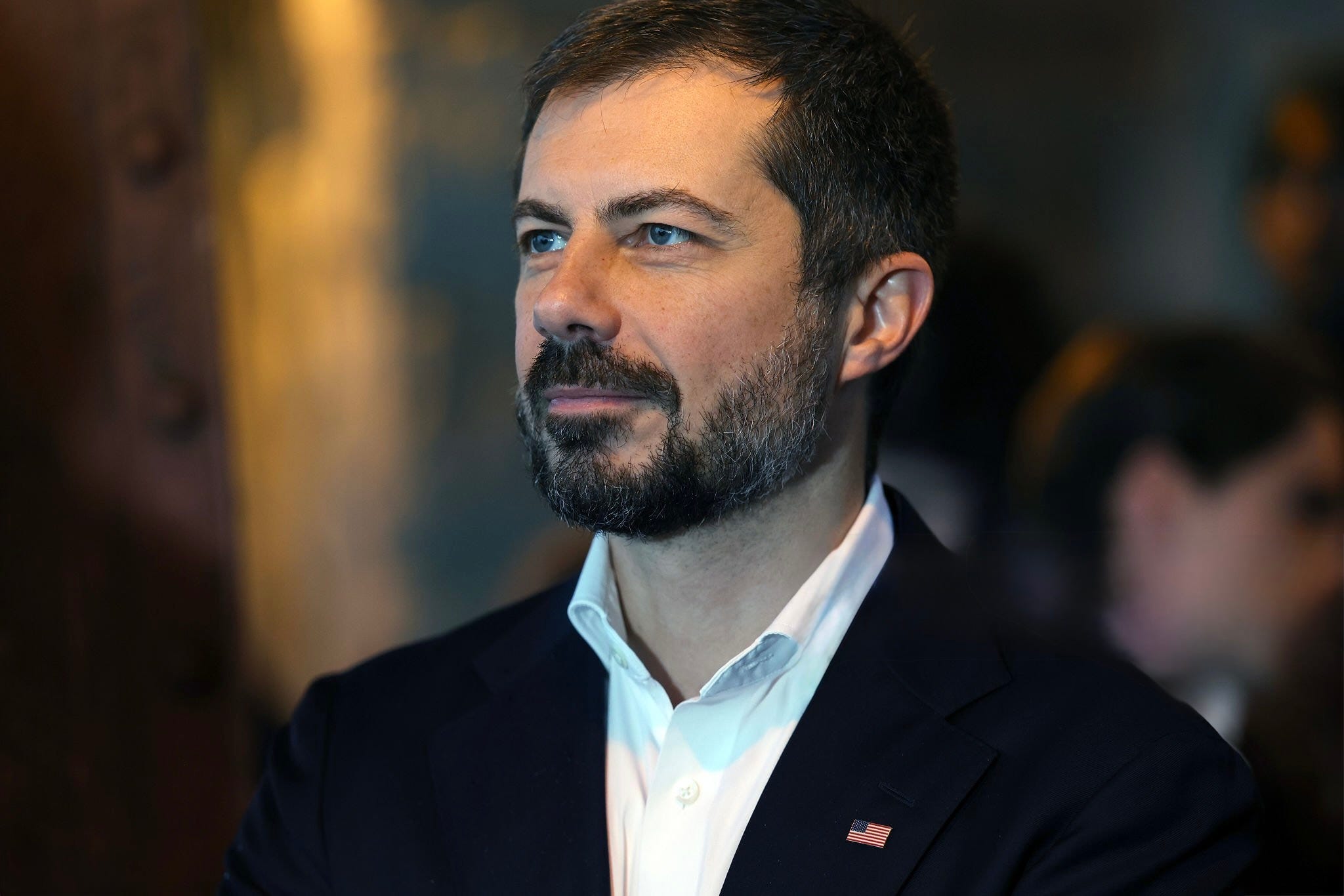
By J. H. Irwin
Author | Storyteller | Capturing Life, Memory, and Meaning
Pete Buttigieg has already demonstrated that he can speak to Americans across political, cultural, and geographic divides.
The question is whether the country is prepared to judge him by his character and qualifications rather than whom he loves. I wonder, is America ready for a gay president?
Pete Buttigieg is intelligent, well-spoken, articulate, and able to communicate with almost any audience. He can walk into a friendly interview or onto a news network openly hostile to his beliefs and political affiliation without becoming defensive, flustered, or cruel. He listens carefully, responds directly, and challenges people without treating them as though they are beneath him.
That should not be unusual in American politics, but today it is.
Buttigieg is also a former mayor, a former United States secretary of transportation, a Harvard graduate, a Rhodes Scholar, and a military veteran who served in Afghanistan. As transportation secretary, he helped oversee tens of thousands of infrastructure projects, expanded protections for airline passengers, and worked on the supply-chain disruptions that followed the pandemic. He was also the first openly gay person confirmed by the Senate to serve in a presidential Cabinet.
During a recent town hall at Will Rogers High School in Tulsa, Oklahoma, Buttigieg entered one of the reddest states in the country and drew a crowd large enough to fill the school gymnasium. The line reportedly stretched around the building, some people waited more than two hours to enter, and the audience gave him more than two dozen ovations.
The significance of that evening was not simply that a Democrat attracted a large crowd in Oklahoma. It was that an openly gay Democrat stood before people in a deeply conservative state and spoke about the concerns affecting their lives without assuming everyone in the room already agreed with him.
He welcomed those who had never voted for a Democrat. He welcomed people who did not consider themselves political. He spoke to those worried about the price of gas, healthcare, public education, Social Security, rural hospitals, corruption, war, and the growing concentration of presidential power. Rather than beginning with party labels, he began with something more basic: a shared sense of right and wrong.
That is one of Buttigieg’s greatest political strengths. He does not speak only to the Democratic base. He looks for the moral and practical ground Americans still share, even when they disagree on policy.
The Ability to Walk Into a Hostile Room
When someone asked how Americans could communicate across political divisions, Buttigieg recommended doing it offline, face to face, whenever possible. He explained why he regularly appears on Fox News and other conservative outlets: How can we blame people for rejecting a position if they have never been allowed to hear it explained honestly?
He said he imagines himself speaking to people he grew up with, people with whom he may strongly disagree but still genuinely likes. That distinction matters. He does not approach every disagreement as an opportunity to humiliate someone. He approaches it as an opportunity to persuade.
That does not mean he refuses to confront dishonesty or injustice. During the Tulsa town hall, he spoke forcefully about threats to the rule of law, attacks on the press, discrimination against transgender Americans, economic inequality, gerrymandering, money in politics, and a Congress that has surrendered too much of its constitutional authority to the presidency. But he connected those issues to the realities people face every day.
When discussing democracy, he did not treat it as an abstract academic concern. He connected unchecked presidential power to tariffs, household expenses, war, and the inability of Congress to restrain a president who no longer believes he must answer to the American people.
“If Congress is flat on its back,” Buttigieg told the audience, “you’re going to have a president who can do whatever he wants.”
That is not complicated political rhetoric. It is a clear explanation of why checks and balances matter to the lives of ordinary Americans.
He Did Not Avoid the Question of LGBTQ+ Rights
Buttigieg was also asked about the fear many LGBTQ+ Americans are experiencing, particularly transgender people and the families who love them. His response was compassionate without becoming evasive. He acknowledged the fear, condemned discrimination, and reminded the audience that most Americans do not want people harmed or mistreated because they are gay, transgender, or otherwise different.
He also spoke about the remarkable distance America has traveled during his own lifetime. When he joined the military, openly acknowledging that he was going home to a boyfriend could have ended his career. When he first ran for mayor in Indiana, being openly gay might have made his candidacy seem impossible. Only a few years later, he was sworn into the presidential Cabinet with his wedding ring on his finger and his husband, Chasten, standing beside him.
His life represents both the progress America has made and the uncertainty now surrounding whether that progress will continue.
Buttigieg did not win every vote during his 2020 presidential campaign, nor did every voter agree with his policies. No candidate should be elected merely because he would make history. Sexual orientation is no more a qualification for the presidency than heterosexuality has ever been.
But neither should being gay be treated as a disqualification.
Perhaps We Are Asking the Wrong Question
When we ask whether America is ready for a gay president, we should consider what we are really asking.
Are we asking whether Americans can accept a president who happens to have a husband rather than a wife? Are we asking whether some voters will place personal prejudice above competence, experience, intelligence, military service, and the ability to lead? Are we still willing to eliminate a qualified candidate because his family does not look like the families that have occupied the White House before?
Pete Buttigieg himself addressed this during the Tulsa town hall. Reflecting on his presidential campaign, he said many independents and Republicans were ultimately less interested in his family than they were in their own families and what kind of job he could do for them.
That may be the most encouraging answer to the question.
People struggling to pay for healthcare are thinking about healthcare. Parents are thinking about the quality of their children’s schools. Workers are thinking about wages, job security, and retirement. Veterans are thinking about whether political leaders understand the human cost of sending service members into war. Americans worried about democracy are looking for leaders who respect the Constitution and recognize that power must always be accountable.
In those moments, whom Pete Buttigieg loves may matter far less than whether voters believe he understands their lives.
What Presidential Leadership Could Look Like
There was another revealing moment during the town hall when Buttigieg was asked whether he had considered running for the United States Senate. He said he had, but he did not believe it was the right office or the best way for him to be useful at this moment.
“You don’t run for it just because you can,” he said. He warned against treating political office as a prize rather than an opportunity to accomplish something.
Imagine how different American politics might be if more candidates approached public office that way.
Pete Buttigieg has not announced a 2028 presidential campaign. If he does, he should be examined as carefully and critically as every other candidate. His record, policies, decisions, strengths, and weaknesses should all be part of that examination. Being intelligent and articulate does not automatically make someone the right president, and representation alone is not enough.
But America should be capable of having that debate without reducing him to the fact that he is gay.
The Tulsa town hall demonstrated that Buttigieg can enter a conservative state, fill a gymnasium, listen to people’s fears, answer difficult questions, defend vulnerable Americans, discuss policy in understandable language, and appeal to people outside his party. It demonstrated that he can be firm without becoming belligerent and hopeful without ignoring the seriousness of this moment.
So perhaps the real question is not whether America is ready for a gay president.
Perhaps the question is whether America is finally ready to choose a president based on intelligence, character, experience, compassion, courage, and the ability to bring people into the conversation, regardless of whom that person loves.
I hope the answer is yes.
Words can still move the world. Read mine → https://substack.com/@jhirwin