

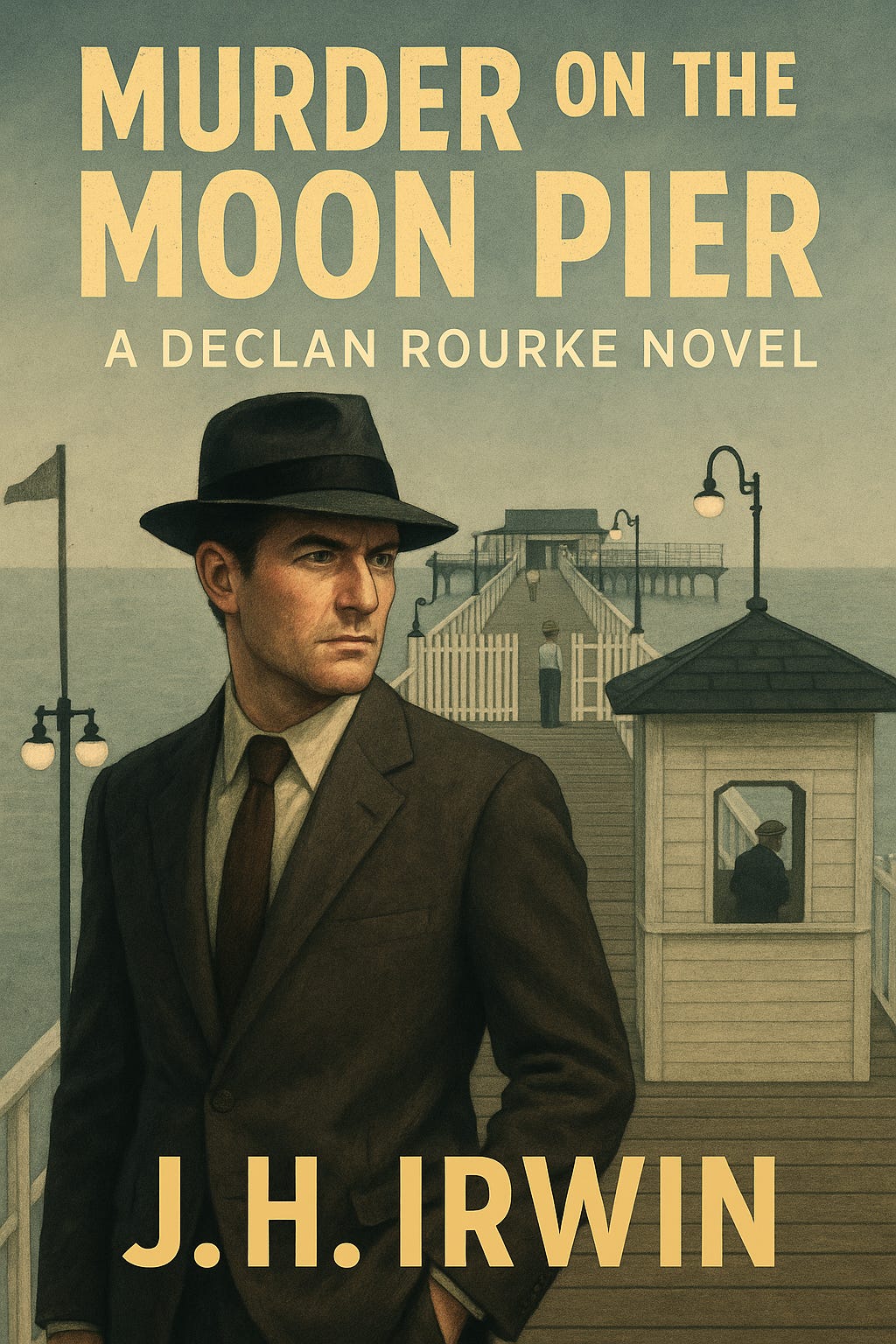
Murder On The Moon Pier
A Declan Rourke Novel
Book One
By J. H. Irwin
Copyright
Copyright © 2026 by J. H. Irwin Multimedia LLC
All rights reserved.
No part of this book may be reproduced or transmitted in any form or by any means, electronic or mechanical, including photocopying, recording, or by any information storage and retrieval system, without written permission from the publisher, except for brief quotations used in reviews.
Published by J. H. Irwin Multimedia LLC
Tampa, Florida
www.jhirwin.com
First Edition: 2026
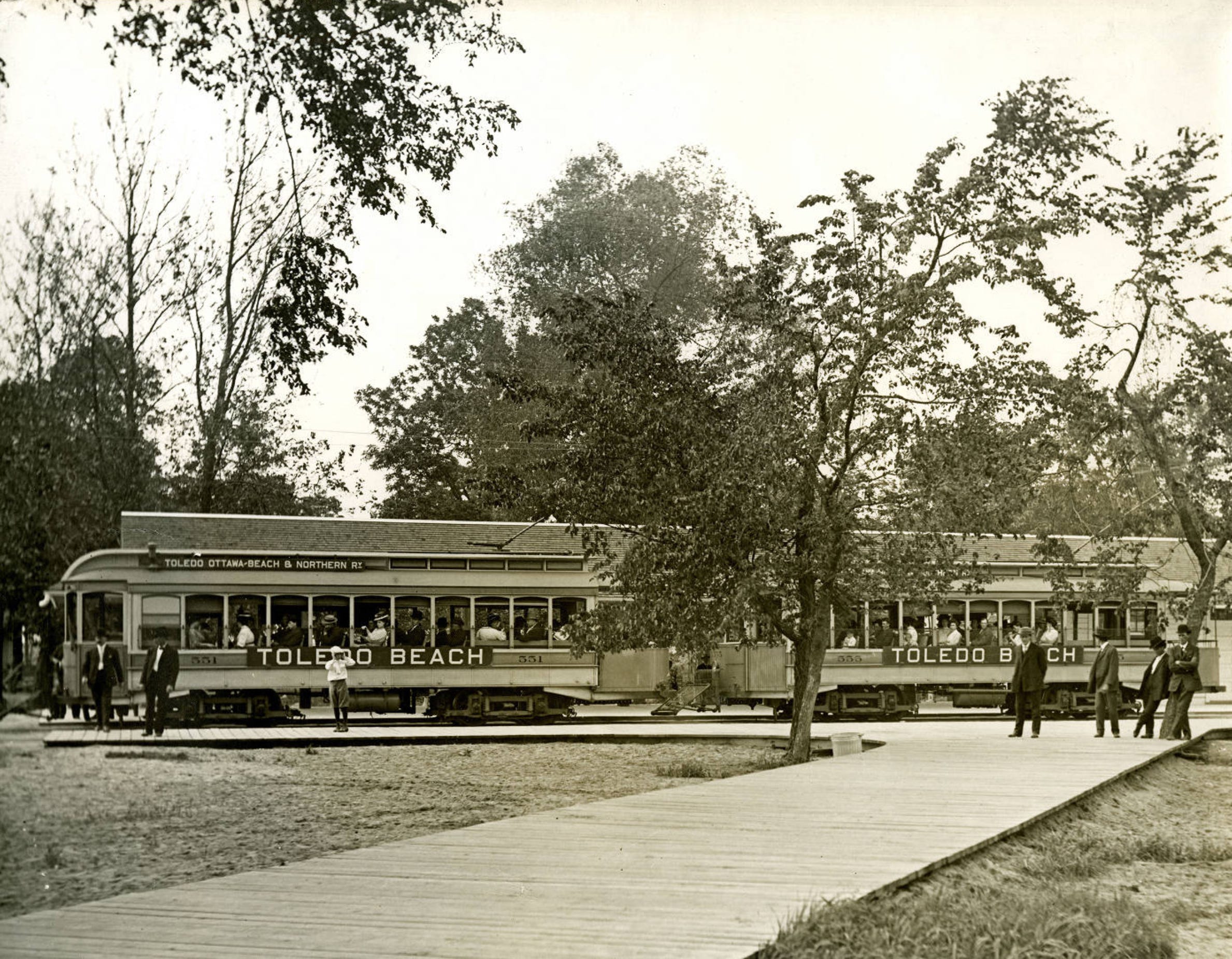
Toledo Beach Trolley Stop
Chapter 2: Echoes of Toledo Beach
The music followed them off the pier.
Not all of it. Just enough.
A thin echo stretched by distance and wind, carried over the sand and boardwalk as if the night hadn’t decided whether to let them go yet.
Rourke and Bennett walked without speaking.
Behind them, the Moon Pier still burned with light. Laughter rose again, louder than it needed to be. The band hadn’t stopped. It wouldn’t.
Places like that didn’t stop for one body.
They passed the Moon Pier Tavern.
The neon buzzed low. Red and blue bled into the dark. The door opened, then closed again, spilling rough laughter into the night before swallowing it back down.
Rourke didn’t look inside.
He didn’t need to.
He marked who stood near the entrance. Who watched the police lights without surprise. Who turned away too quickly.
That was enough.
The air had shifted.
Warmer than it should have been. Heavier. The smell of butter and smoke still clung to it, but something else rode underneath now.
Metal.
Oil.
Distance.
From the north, sound carried.
High. Sharp. Rising and falling in waves.
Screams.
Not fear.
Something closer to it.
“Toledo Beach,” Bennett said.
Rourke nodded.
The horizon pulsed faintly in that direction. Not steady light like the pier. This flickered. Moved. Drew the eye whether you wanted it to or not.
Bennett rubbed a hand across his face. “Mason’s going to be the first name anyone says.”
“He’s supposed to be,” Rourke replied.
“He’s got motive,” Bennett said. “Leclair owed him. Enough to matter.”
“And Mason collects loudly.”
Bennett glanced at him. “You think this was quiet.”
Rourke didn’t answer right away.
They reached the edge of the boardwalk where the sand met packed earth and trolley tracks cut through both.
“I think this was placed,” he said finally.
Bennett exhaled through his nose. No argument.
The trolley platform sat ahead, lit just enough to function. A few people waited. Not many. The late crowd. The ones still looking for something.
Or avoiding it.
The car arrived with a low hum and a single sharp bell.
Too clean a sound for a night like this.
Doors opened. People stepped on and off without looking at each other. The movement had none of the ease from earlier.
Bennett turned toward it. “I’m going north.”
Rourke watched the car.
The windows reflected light instead of showing faces. Inside, shapes moved, but nothing held long enough to read.
“That’s where he came from,” Bennett added. “Trolley conductor remembers him. Less than an hour before the body was found.”
Rourke’s eyes narrowed slightly.
“Alone?”
“So he says.”
Rourke nodded once.
“Toledo Beach,” Bennett said again.
This time it wasn’t a guess.
It was direction.
The bell rang. The doors began to close.
Bennett stepped up onto the platform, then paused.
“You coming?”
Rourke looked back once toward the pier.
The lights were still bright. The music still carried. From here, you couldn’t see the patrol car. Couldn’t see the body.
Just the illusion.
“I’ll catch the next one,” he said.
Bennett studied him for a moment, then nodded. “Don’t take too long.”
The trolley lurched forward and pulled away, heading north along the shoreline. The bell rang once more as it disappeared into the dark.
Rourke stood where he was until the sound thinned out.
Then he turned.
Back toward the tavern.
Inside, the air hit harder.
Beer. Smoke. Heat held too long inside walls that had learned not to breathe.
Voices stayed low. Not quiet. Just contained.
Rourke stepped in without hesitation.
The bartender glanced up, took measure, then looked away.
That was its own answer.
Rourke moved past the bar, deeper into the room where the light didn’t hold as well.
A table in the corner.
Carl Mason.
Broad shoulders. Thick hands. Counting money like it mattered more than anything else in the room.
Two men beside him. Younger. Still learning how to sit still.
Rourke stopped just short of the table.
Mason looked up.
“You lost?” he said.
Rourke reached into his pocket and set the poker chip down between them.
Red spade.
“Found this,” he said.
The men beside Mason shifted.
Mason didn’t touch the chip at first. Just looked at it.
Then at Rourke.
“That ain’t mine.”
“It’s got your mark.”
“Chips move.”
“So do bodies.”
That landed.
Mason picked it up, turned it once, then set it back down.
“Leclair owed money,” he said. “To me. To others.”
“You collect with ice picks now?”
Mason leaned forward slightly.
“I don’t collect like that at all.”
Rourke held his gaze.
“That’s what I thought.”
A pause.
The room didn’t go quiet, but it changed.
Mason glanced once toward the bar. Then back.
“You’re asking questions you shouldn’t.”
“I’m asking the right ones.”
Mason studied him longer this time.
Then:
“You want advice?”
Rourke didn’t answer.
“Let the cops chase that chip,” Mason said. “Let them chase me. That’s clean.”
“And what isn’t?”
Mason hesitated.
Just a fraction.
That was enough.
“There are people who don’t like noise,” he said carefully. “People who don’t like their names spoken.”
Rourke didn’t blink.
“They don’t sit in places like this,” Mason added. “They don’t use men like me unless they have to.”
“They use places,” Rourke said.
Mason’s jaw tightened.
“They use history.”
There it was.
Rourke let the silence sit between them.
“Leclair was digging,” he said.
Mason gave a short laugh that didn’t reach his eyes. “Leclair was hungry.”
“Same thing.”
Mason stood.
His men followed.
“Whatever you think you’re looking at,” Mason said, “you’re already too close.”
Rourke stepped aside, giving him space.
Mason paused as he passed.
“If you’re smart,” he added quietly, “you get on that next trolley and keep going north.”
Rourke didn’t turn.
He listened to Mason leave.
Then he walked back out into the night.
The air felt different now.
Cleaner.
Colder.
The trolley tracks gleamed faintly under the lights, stretching north along the shoreline.
Toledo Beach.
Rourke looked in that direction.
The glow was stronger now. Brighter. Alive in a way the pier wasn’t.
Not warm.
Hungry.
He stepped onto the platform just as the next trolley approached.
The bell rang.
Doors opened.
Rourke boarded without hesitation.
As the car pulled away, Lakeside slid behind him.
The lights faded.
The music disappeared.
Ahead, the glow of Toledo Beach grew larger.
Louder.
Closer.
Rourke rested one hand against the rail and watched it come.
Leclair hadn’t died on the pier.
He’d come from somewhere.
And whatever waited ahead…
Was still there.