



By J. H. Irwin
Author | Storyteller | Capturing Life, Memory, and Meaning
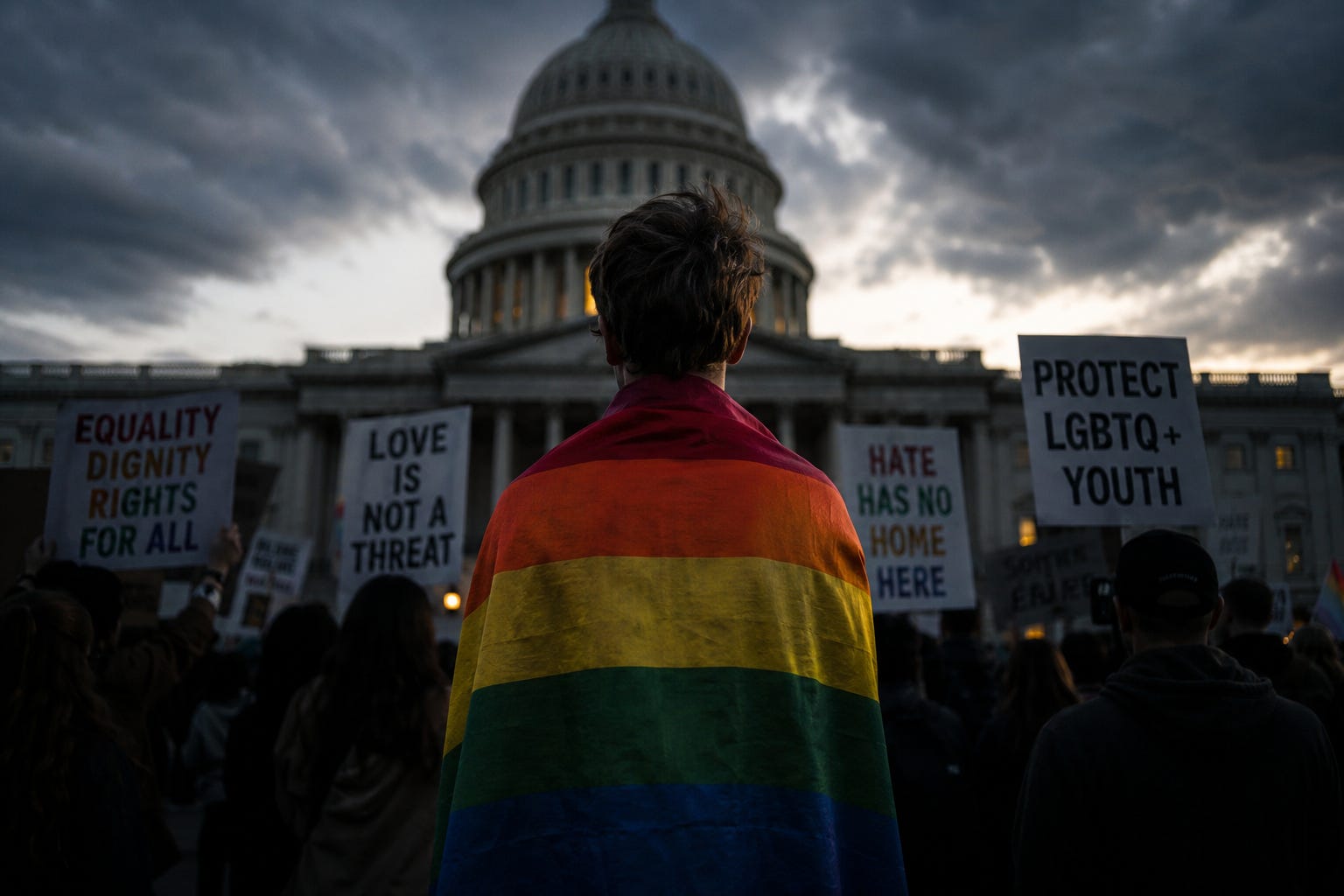
Every June, rainbow flags begin to appear across America
They hang from storefronts and front porches, fly from city buildings, and fill social media feeds with messages of celebration and solidarity. To some observers, Pride Month may look like a festival, a parade, or a colorful annual tradition. For many LGBTQ+ people, however, Pride represents something far deeper. It is a reminder of where we have been, how much has been sacrificed to secure the freedoms many now enjoy, and why the work of protecting those freedoms remains unfinished.
As a gay man who has lived through decades of social change, I have witnessed extraordinary progress during my lifetime. I have seen people who once hid their identities begin living openly and honestly. I have watched loving couples gain the right to marry. I have seen families reconcile after years of fear, silence, and misunderstanding. Perhaps most importantly, I have watched younger generations grow up with possibilities that many of us could scarcely imagine when we were their age.
Yet Pride Month arrives this year against a backdrop that feels increasingly unsettled. Across the country, civil rights protections are being challenged, public rhetoric has grown more hostile, and LGBTQ+ people once again find themselves at the center of political and cultural battles. In that environment, Pride becomes more than a celebration of past victories. It becomes an affirmation that our dignity, our humanity, and our place in society are not subjects open for negotiation.
Pride Was Born From Resistance
The origins of Pride are rooted not in celebration but in resistance. The modern LGBTQ+ rights movement emerged from a period when discrimination was not merely tolerated but often enforced through laws, policies, and social expectations. People lost jobs, housing, family relationships, and personal safety simply because of who they were or whom they loved.
The events surrounding the Stonewall uprising in 1969 became a turning point because they represented a refusal to quietly accept that treatment any longer. What followed was not a demand for special privileges. It was a demand for equal treatment under the law and equal dignity in society.
The goals were fundamentally human. LGBTQ+ people wanted the opportunity to live openly, pursue careers, build families, contribute to their communities, and participate fully in American life without fear of punishment or exclusion. Those aspirations were never radical. They were simply the same aspirations shared by countless others seeking the freedom to live authentically.
Why Pride Still Matters
One of the questions that often emerges each June is whether Pride is still necessary. After all, significant progress has been made. Marriage equality became the law of the land. LGBTQ+ people serve openly in many professions and institutions. Representation in media, business, and public life has expanded dramatically compared to previous generations.
Yet history teaches that progress is not a straight line. Rights secured through decades of activism can become vulnerable when political winds shift. Social acceptance that feels settled can reveal unexpected fragility when fear and division become useful tools in public discourse.
The importance of Pride in 2026 lies in recognizing that equality is measured by more than the existence of legal protections. It is measured by whether people feel safe being themselves. It is measured by whether young people can envision a future without shame. It is measured by whether families can live openly without becoming targets for hostility or suspicion.
When public figures, media personalities, or political movements encourage distrust or resentment toward LGBTQ+ people, Pride serves as a reminder that visibility remains important. It reminds society that behind every debate, headline, and policy discussion are real human beings living real lives.
Pride Beyond Our Borders
When Americans discuss Pride, it is easy to focus exclusively on our own political climate and cultural battles. While those concerns are real and deserve attention, Pride also invites us to remember that millions of LGBTQ+ people around the world face circumstances far more dangerous than those experienced by most Americans today.
In dozens of countries, same-sex relationships remain criminalized. In some nations, being openly gay can lead to arrest, imprisonment, public humiliation, or state-sanctioned discrimination. In the most extreme cases, individuals can face the death penalty simply because of who they are or whom they love.
For many LGBTQ+ people across the globe, there are no Pride parades. There are no rainbow flags displayed in public squares. There are no legal protections, support networks, or opportunities to live openly without fear. Many spend their lives hiding their identities from governments, employers, neighbors, and even their own families because discovery could have devastating consequences.
Remembering this reality provides important perspective. Pride is not merely a celebration of freedoms already secured. It is also an expression of solidarity with those who continue to live without those freedoms. The rainbow flag has become a global symbol not because every battle has been won, but because the struggle for dignity, safety, and equality remains unfinished in much of the world.
When we celebrate Pride, we celebrate our own progress, but we also acknowledge our shared responsibility to stand with those whose voices are silenced, whose rights are denied, and whose lives remain at risk simply for being themselves.
The Human Cost of Hate
One of the most troubling aspects of rising hostility toward any minority group is the assumption that the damage remains limited to those directly targeted. In reality, discrimination creates ripple effects that extend far beyond its immediate victims.
Families become strained. Friendships become fractured. Communities become divided. Young people struggling to understand themselves receive messages suggesting that their authenticity is something to fear rather than embrace. The emotional consequences can be profound, contributing to anxiety, depression, isolation, and a diminished sense of belonging.
For LGBTQ+ youth in particular, these messages can shape the trajectory of an entire life. The difference between acceptance and rejection often determines whether a young person develops confidence in who they are or learns to conceal essential parts of themselves. That is why representation matters. That is why visibility matters. And that is why Pride matters.
Pride offers a counter-message to fear. It communicates that LGBTQ+ people are not alone, that their lives have value, and that there is a community ready to stand beside them. In a world where many still struggle to feel accepted, that message can be transformative.
Pride Is Also About Joy
While Pride emerged from resistance, it would be incomplete to describe it solely through the lens of struggle. One of the most beautiful aspects of Pride Month is that it celebrates the ordinary humanity of LGBTQ+ lives.
Too often, discussions about LGBTQ+ people become focused exclusively on controversy, legislation, or conflict. Lost in those debates is a simple truth: most LGBTQ+ people are living lives remarkably similar to everyone else. They are raising children, caring for aging parents, building careers, pursuing dreams, navigating relationships, worrying about bills, celebrating milestones, and searching for happiness.
Pride creates space to acknowledge that reality. It celebrates not only the battles fought but the lives lived. There is profound power in seeing people gather openly and joyfully after generations were told they should remain hidden. That visibility transforms Pride from a protest alone into a declaration of belonging.
The Role of Allies
The story of civil rights in America has never been written by marginalized communities alone. Every meaningful expansion of freedom has required allies willing to stand alongside those whose rights were under threat.
Pride Month offers an opportunity for allies to reaffirm their commitment to fairness, dignity, and equal treatment. Supporting LGBTQ+ people does not require sharing every life experience. It simply requires recognizing a common humanity and understanding that another person’s freedom does not diminish one’s own.
The strongest societies are built not through exclusion but through inclusion. They thrive when people are allowed to contribute fully and authentically without fear that their identity will be used against them.
A Promise Worth Keeping
At its heart, Pride is a promise. It is a promise to those who came before us and endured discrimination so future generations might experience greater freedom. It is a promise to those who continue facing hostility today that they will not stand alone. It is a promise to young people who are still discovering who they are that there is a place for them in this world exactly as they are.
As Pride Month begins in 2026, that promise feels especially important. The challenges facing the LGBTQ+ community are real, and the progress achieved over decades should never be taken for granted. Yet Pride has always been about more than responding to adversity. It is about affirming the belief that every person deserves dignity, opportunity, and the freedom to live honestly.
The rainbow flag that appears each June is not simply a symbol of celebration. It is a reminder of resilience, courage, and hope. It represents a commitment to building a society where people are judged not by fear or prejudice but by the content of their character and the quality of their humanity.
That is why Pride matters. Not because the struggle is over, but because the promise is worth keeping.
Words can still move the world. Read mine → https://substack.com/@jhirwin
#PrideMonth #LGBTQ #HumanRights #Equality #Democracy #Inclusion #StillHuman #TheHumanCostOfThisEra #JHIrwin #JHIrwinMultimedia