


By J. H. Irwin
Author | Content Creator | Humanitarian Voice | Pro-Democracy, LGBTQ+ & Human Rights Advocate
As we move through the Christmas season, a time so often associated with safety, warmth, and belonging, I find myself thinking about those for whom none of those things are guaranteed. This article was prompted by a connection that crosses borders and realities, and by a deep awareness that while LGBTQ+ rights in the United States remain fragile and contested, there are places in the world where simply existing openly can cost someone their freedom and in some cases, their life.
When Love Is a Crime
As Christmas approaches, many of us are surrounded by traditions that center on family, love, and the simple comfort of being safe in our own homes. For millions of LGBTQ+ people around the world, that safety is not just uncertain. It is forbidden.
In the United States, LGBTQ+ rights are under renewed pressure. Hard-won protections are being challenged, rolled back, or placed at risk by political movements that thrive on fear and division. These struggles are real and urgent. But it is also important to widen our lens and recognize that for LGBTQ+ individuals in other parts of the world, the stakes are far higher.
In more than 60 countries today, same-sex relationships are criminalized. In some, the punishment is prison. In others, it includes corporal punishment, forced labor, or public humiliation. And in a handful of countries, being gay, lesbian, bisexual, or trans can be punishable by death.
This is not theoretical. These laws are enforced.
People are arrested after being reported by neighbors or family members. Online conversations are monitored. Police raids target private homes. Lives are permanently altered by a single accusation, often with no legal protection or recourse.
Imagine living every day knowing that love itself could make you a criminal.
The Hidden Cost of Silence
Even in countries where enforcement is inconsistent, the mere existence of anti-gay laws creates a climate of fear. It silences people. It keeps them closeted. It isolates them from healthcare, employment, and community support. It tells them, again and again, that their lives are “less than” in the eyes of some.
For LGBTQ+ people in these regions, survival often depends on secrecy. Many enter heterosexual marriages to avoid suspicion. Others flee their countries if they can, seeking asylum and safety elsewhere. Some have no escape at all.
And yet, despite these realities, LGBTQ+ people continue to exist, love, and hope.
That resilience deserves recognition.
Why Awareness Still Matters
It can be tempting, especially during the holidays, to turn inward. To focus on our own challenges and our own battles. But human rights are not a zero-sum concern. Caring about global LGBTQ+ persecution does not diminish the fight for equality at home. It strengthens it.
When we understand how easily rights can be stripped away, we become more vigilant in protecting them wherever we live.
When we acknowledge the courage it takes to exist openly in hostile environments, we gain perspective on our own responsibilities. Silence, especially from safer places, allows injustice to thrive unchecked.
A Christmas Wish Rooted in Humanity
At its core, Christmas carries a simple message. That every human life has value. That compassion matters. That love should never be met with violence or fear.
My hope this season is not abstract or naïve. It is grounded in humanity.
I hope for a world where no one fears prison for loving another adult.
I hope for laws that protect rather than punish.
I hope for leaders who understand that human rights are not cultural preferences, but moral imperatives.
And I hope for LGBTQ+ individuals everywhere to one day live without fear, hiding, or shame.
Change does not happen overnight. But it does begin with awareness, empathy, and the refusal to look away.
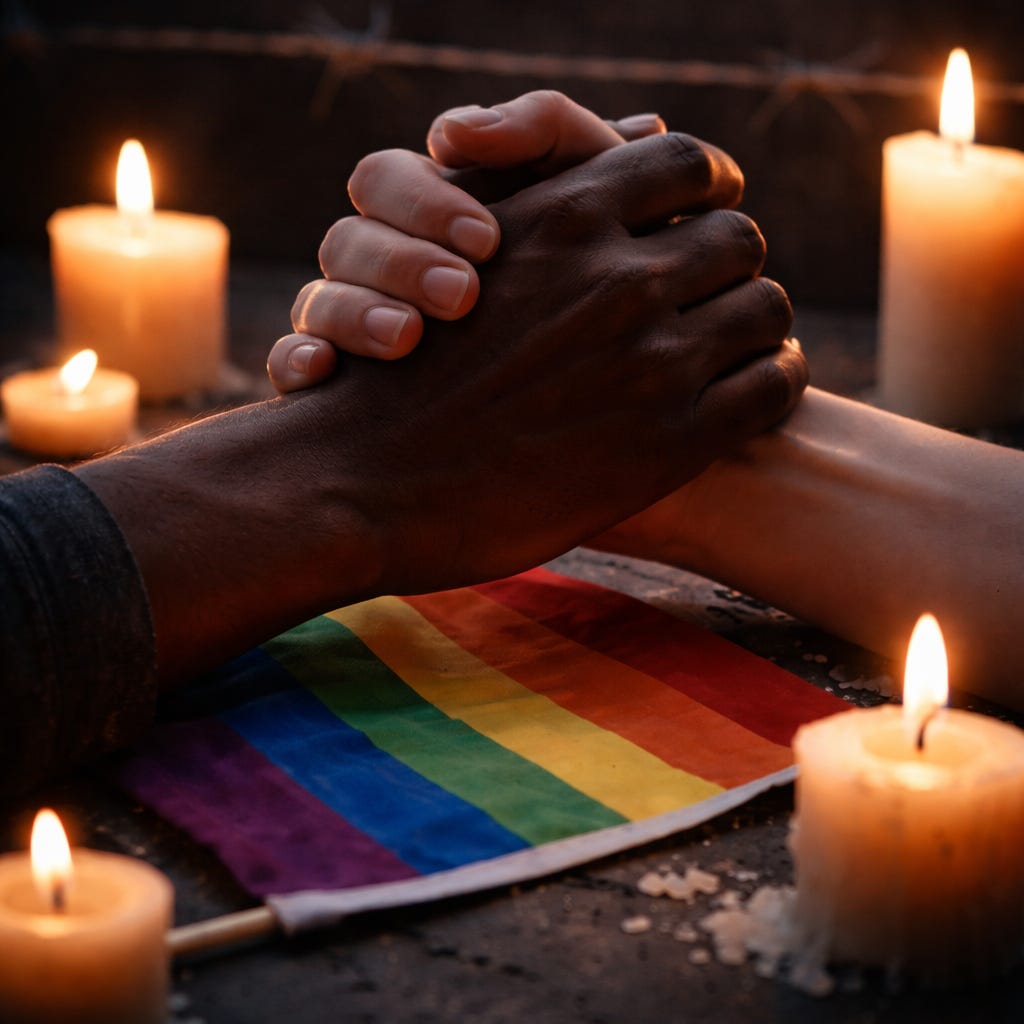
As we light candles, exchange gifts, and gather with those we love, may we remember those who cannot. And may we carry their stories with us into the new year, committed to a future where dignity and safety are not privileges, but rights shared by all.