


By J. H. Irwin
Having known Charlie Belknap as a close friend for several decades, I’ve had the unique privilege of a front-row seat to his remarkable journey.
I watched him take on the legacy of a legendary thrill show and, through sheer determination and vision, build it into a modern spectacle. During his years at the helm, he took the business to incredible new highs, driven by an astute understanding of the industry and an uncanny sense for what captivates an audience.
But to see him only as a sharp businessman is to see half the picture. Charlie is, and has always been, a genuinely good person with an unwavering moral compass. His remarkable eye for “what works” extends far beyond stunts and balance sheets; it is a deep-seated wisdom he applies to his business and personal relationships alike. He is a testament to the fact that true success is built not just on talent, but on integrity and character. This biography is not just the story of a stunt show; it is the story of the remarkable man who was always at its heart.
The Last of the Great Impresarios
The air of the county fairgrounds on a summer evening is a potent cocktail of scents: sweet, sticky cotton candy, sizzling hot dogs, and the sharp, metallic tang of gasoline. In the grandstand, under the glare of towering floodlights, a hush falls over the capacity crowd. All eyes are fixed on the dirt track where a car, engine roaring, accelerates toward a wooden wall engulfed in a curtain of orange flame. This is no ordinary drive. Clinging to the hood, a human form braces for impact. In a percussive explosion of splintering wood and fire, the car smashes through the barrier in a signature stunt known as the “Human Battering Ram”. The crowd erupts in a wave of gasps and thunderous applause, their appetite for spectacle thoroughly satisfied.
From a booth high above the controlled chaos, a calm voice narrates the mayhem. This is the domain of Charles “Charlie” Belknap, the ringleader of this mechanical circus. He is more than just the owner; he is the general manager, the announcer, the promoter, and the calm center of the storm. For years, he commanded this daredevil’s ballet, orchestrating a symphony of screeching tires and calculated destruction for captivated audiences across North America. Belknap stood as a pivotal figure in the world of outdoor amusements, a bridge between the gritty, barnstorming “Hell Drivers” of a bygone era and the polished, corporate-sponsored entertainment of the modern age.
As head of the last nationally sponsored touring auto thrill show in America, Belknap was not merely a show owner; he was an innovator and a custodian of a uniquely American art form. He successfully navigated the auto thrill show through the changing tides of the entertainment industry, demonstrating a masterclass in showmanship, business acumen, and adaptation. His career represents the story of how a visceral, niche spectacle was professionalized and preserved, leaving an indelible mark on the landscape of American popular entertainment.
The Road to the Thrill Show: A Legacy of Daredevils
The Origins of Mayhem
To understand Charlie Belknap’s contribution is to understand the tradition he inherited. The auto thrill show was born from America’s burgeoning love affair with the automobile, combined with a timeless fascination for daredevilry. Pioneers like Earl “Lucky” Teter , “Lucky” Lee Lott, and, Joie Chitwood, became folk heroes in the 1930s, 40s, and 50s. Lott’s “Hell Drivers” were barnstorming legends, turning hundreds of cars, trucks, and motorcycles into twisted metal sculptures at county and state fairs, racetracks, and any open field that could draw an audience. They created the blueprint for a new form of entertainment, one built on speed, danger, and the spectacular destruction of the very machines that were reshaping the nation.
The Kochman Era
In the decades that followed, the industry was professionalized and dominated by one man: Jack Kochman, widely regarded as the “last great thrill show impresario”. After Lucky Teter’s fatal crash in 1942, Kochman purchased the late stunt driver’s equipment and launched his own “World Champion Hell Drivers”. Kochman possessed a keen business sense, recognizing the marketing potential of the thrill show. He forged long-standing relationships with automobile manufacturers and tire companies, securing the corporate sponsorships that would become essential to the industry’s survival and growth. His operation was so successful that he was running multiple thrill show teams by 1960. The Jack Kochman Thrill Show became the gold standard, a nationwide spectacle of automotive artistry and mayhem.
Enter Tonny Petersen
A key figure in the Kochman dynasty was Tonny Petersen. Hailing from Copenhagen, Denmark, Petersen was a trained acrobat who came to the United States in the early 1950s. In 1957, he joined the Jack Kochman Hell Drivers, where his acrobatic balance and daredevil nerve made him a natural star. He perfected the art of two-wheel driving, a stunt that became his signature. His legendary status was cemented during the 1964-65 New York World’s Fair, where he starred in an astonishing 3,700 consecutive shows, driving brand-new Dodge automobiles on two wheels in front of millions of fairgoers. For decades, he was the feature driver for Kochman’s enterprise.
Passing the Torch
After more than four decades at the helm, Jack Kochman retired from the thrill show business in 1989. In a move that spoke volumes about the culture of the industry, he did not sell his empire to the highest bidder. Instead, he “passed the torch to his most respected employee, Charlie Belknap”. This was not a cold corporate acquisition but a succession rooted in merit, skill, and mutual respect. Kochman, the industry’s most powerful figure, saw in Belknap the rightful heir to his legacy. This anointment gave Charlie Belknap immediate and unparalleled credibility as he stepped into the role of impresario, tasked with carrying a significant American entertainment tradition into a new era. He was not an outsider; he was the chosen successor.
Taking the Wheel (1989–2004): The Hollywood Stunt Show Era
A New Command
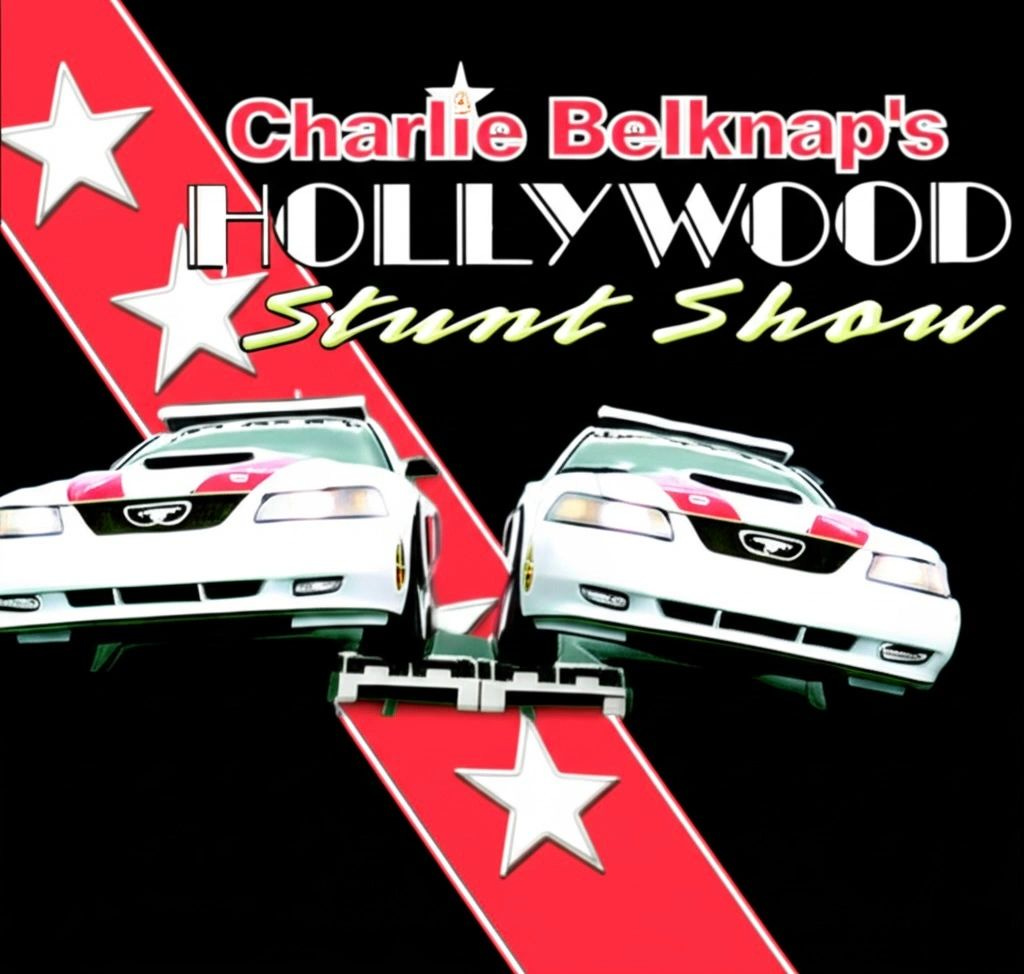
With the torch passed, Charlie Belknap took command of the longest-running thrill show production in history. The fifteen-year period from 1989 to 2004 marked the Belknap era, a time of rebranding and renewed prominence. The show, which had operated under various names including the Jack Kochman Thrill Show and the Hell Drivers, was strategically renamed. Under Belknap’s leadership, it became known as the “Hollywood Stunt Show”.
This change was a stroke of marketing genius. The name “Hell Drivers” evoked a sense of raw, almost reckless danger, a throwback to the barnstorming days. The new name, “Hollywood Stunt Show,” suggested something more: professionalism, precision, and a direct connection to the glamour and excitement of the film industry. It implied that audiences were getting a behind-the-scenes look at the magic of the movies, performed live before their very eyes. This rebranding made the show infinitely more marketable to family-oriented venues like state fairs and, crucially, to major corporate sponsors. Belknap wasn’t just selling crashes; he was selling the allure of Hollywood, live and in person.
The Belknap-Petersen Partnership
The new leadership structure proved to be a formidable partnership. Charlie Belknap, based in Florida, served as the “General Manager and Owner”. He was the front man, the announcer whose voice guided the audience through the spectacle, and the business mind navigating the complex logistics of touring and sponsorship. Tonny Petersen, from North Carolina, was the on-the-ground commander, serving as the “Stunt Coordinator” and star driver, lending his decades of experience and legendary status to the performance itself. This clear division of labor, Belknap as the impresario and Petersen as the field marshal was the engine that drove the show’s success.
Claiming the Top Spot
Under this new command, the show quickly ascended to the pinnacle of the industry with the closing of the Joie Chitwood Thrill Show and the addition of Tim Chitwood in 1998, joining Tonny Peterson as the stars of the show. A promotional website from around 1999, when Belknap was in his tenth year of ownership, boldly declared him as “Leading the Auto Thrill Show industry into the next century, as the Number One Top Producer of Auto Thrill Shows World Wide”. This claim, backed by a grueling tour schedule that took the show across the United States, Canada, and the Caribbean, solidified the Hollywood Stunt Show’s reputation as the premier attraction of its kind.
The Daredevil’s Ballet: The Stunts and the Stars
The Repertoire of Risk
The heart of the Hollywood Stunt Show was its “thrill filled performance, featuring many of the stunts you have seen in movies, and on TV”. A typical 70-minute show was a carefully choreographed sequence of roughly 20 stunt “events” designed to showcase a full spectrum of vehicular mayhem. The repertoire was a mix of classic daredevilry and modern precision.
The performance included feats of pure skill, such as “Hell Driving,” which involved multiple cars in tight, side-by-side precision maneuvers at high speed. This was complemented by Tonny Petersen and Tim Chitwood’s signature two-wheel driving, known as “Hi-Skis,” and the “dangerous Reverse Spin”. The show also delivered the crashes and fire the crowds craved. Stunts like the “fire wall crash,” car rollovers, high-speed car jumps, and the “Dive Bomber” act were staples of the performance.
The show’s signature spectacles were its most memorable. The “Human Battering Ram,” performed both day and night, saw a stuntman ride the hood of a car as it smashed through a flaming barricade, a moment of “nail biting” tension and explosive release. The show also featured the deafening roar of a jet-powered truck and the aerial acrobatics of motorcycle jumpers who would soar through flaming board walls or over moving vehicles.
The Comedy Beat
To provide a moment of levity amidst the high-stakes danger, the show incorporated comedic elements. The most popular of these involved “Sparky the Daredevil Clown,” a character performed by Andy Guerrero. In a gag that Belknap himself noted was a consistent favorite among younger audience members, Sparky would enter a prop outhouse, which would then promptly explode. This blend of heart-stopping thrills and lighthearted comedy created a well-rounded family entertainment experience.
The Team of Talent
While Belknap and Petersen were the leaders, the Hollywood Stunt Show was fundamentally a team effort, relying on a roster of skilled and fearless performers. These individuals were the true stars of the show, putting their bodies on the line night after night. Acknowledging their contributions is essential to understanding the show’s success.
The Toyota Years and Life on the Road
The Power of Sponsorship
The success and longevity of the Hollywood Stunt Show during the 1990s and early 2000s were inextricably linked to its powerful corporate partnerships. For much of this period, the show was officially known as the “Toyota Hollywood Stunt Show”. This was a symbiotic relationship. Toyota provided the vehicles and financial backing, and in return, the show served as a high-octane, live-action advertisement. The performances were a promotional tool to demonstrate the “agility, power, safety, structural stability, suspension, and reliability” of Toyota’s cars and trucks to a captive audience. The partnership extended to merchandise, with items like souvenir baseball caps bearing the show’s and sponsor’s logos sold to eager fans.
In 2002 Belknap switched from Toyota to Ford vehicles, incorporating Mustang GTs and Ford trucks as the primary vehicles in the show. Other national collaborations included a 15 year sponsorship from Bridgestone/Firestone USA.
Other companies Belknap worked with included Anheuser-Busch, NAPA Auto Parts, Alfa-Leisure Travel Trailers, and, Agway Petroleum.
Life on Tour
Life for the Hollywood Stunt Show crew was a grueling nomadic existence. The show was a fixture at state fairs, county fairs, exhibitions, speedways, and other community events across America, with a reach that extended into Canada and the Caribbean. The schedule was relentless. One tour in 2004, for example, packed 91 shows in 48 cities over 15 weeks. This demanding lifestyle required a dedicated team to transport the show cars, jet truck, and all the necessary ramps and equipment from one venue to the next.
Safety First
Despite the inherent danger of the product they were selling, safety was the paramount concern for Belknap and his crew. To mitigate these risks, Belknap instituted a strict protocol. He emphasized that the number one safety procedure was the “repetition of stunts, ensuring everything is scheduled and performed in the same order to make it routine for everyone involved”. This disciplined approach, turning chaos into routine, was the key to managing the risks of a business built on the very edge of control.
The Final Lap and a New Midway (Post-2004)
The Curtain Falls
When the Hollywood Stunt Show took its final bow at the end of the 2004 season, it marked the end of an era for both its owner and the industry. Tonny Petersen, after a legendary career spanning nearly half a century, would go on to headline other shows for a time. For Charlie Belknap, however, this was not an exit from the world of amusement, but a transition to a new stage.
A New Career on the Midway
Charlie Belknap seamlessly pivoted, leveraging his decades of experience as a showman into a new career. His skills were not limited to orchestrating auto stunts but encompassed the entire ecosystem of the outdoor amusement business. His true talent lay in promotion, public relations, and a deep understanding of the fair-going public. By 2005, after retiring his stunt show, he had taken on the role of “press relations manager” for Powers Great American Midways, one of the country’s prominent traveling carnival operators.
This move demonstrated that Belknap was a highly respected and sought-after figure in the broader industry. The stunt show was the most visible expression of his talent, but his core expertise was in showmanship. In his new capacity, he became the public face of the midway, a natural extension of his role as the stunt show’s charismatic announcer. He spoke to the press about the carnival’s record-setting attendance at major events like the Montgomery County Fair in Gaithersburg, Maryland. He was the voice detailing the exciting new rides and features for massive events like the N.C. State Fair, where Powers Great American Midways provided one of the largest midways in North America with around 110 rides.
Continued Growth
His career in the carnival world continued to flourish. He later was a key staff member for a related entity, Powers & Thomas Midway Entertainment, where he was responsible for Public Relations, Marketing, and, securing new accounts. Industry directories from as late as 2019 list Charlie Belknap as the primary contact for the company, complete with a phone number and email address, underscoring his long-term involvement and importance in the midway business long after the tire smoke from his stunt show had cleared. This successful second act proved that he was not just a “stunt guy”; he was an amusement industry professional of the highest caliber.
A Legacy in Tire Smoke and Applause
Charlie Belknap’s career is a remarkable journey through the heart of American outdoor entertainment. He began as the hand-picked successor to a legend, inheriting the legacy of the great Hell Drivers who had thrilled audiences for half a century. He then masterfully rebranded this tradition for a new, modern era, transforming it into the globally recognized Hollywood Stunt Show. For fifteen years, he stood at the pinnacle of his profession, a master promoter who understood how to blend visceral thrills with corporate sponsorship to create a successful and enduring enterprise. When the time came to park the stunt cars for good, he did not fade away. Instead, he transitioned seamlessly into a new role as a respected elder statesman of the carnival midway, lending his considerable promotional talents to another sector of the amusement world.
His legacy is twofold. First, he was a crucial custodian of a unique American art form. At a time when such live spectacles could have easily faded into obscurity, Belknap’s leadership ensured that the auto thrill show not only survived but thrived, roaring into the 21st century. Second, he was the consummate showman. His innate understanding of business, marketing, and what truly captivates an audience allowed him to succeed across multiple facets of a demanding industry. From orchestrating a firewall crash to promoting one of the largest midways in North America, Charlie Belknap knew how to put on a show. His long and impactful career solidifies his place in the annals of popular entertainment as a true ringleader, innovator, and the last of the great thrill show impresarios.