


By J. H. Irwin
Author | Storyteller | Capturing Life, Memory, and Meaning
In May, my husband and I spent a week in New York City, a place that somehow feels both electric and deeply human at the same time.
We saw four Broadway performances in six days.
Oh, Mary! with Maya Rudolph and Cheyenne Jackson.
Every Brilliant Thing with Daniel Radcliffe.
Death of a Salesman with Nathan Lane and Laurie Metcalf.
And Giant with John Lithgow.
Every performance reminded me what art can do when it is placed in the hands of people who understand truth, vulnerability, and the complicated beauty of being alive.
But as unforgettable as Broadway was, the moment that stayed with me most happened on the water.
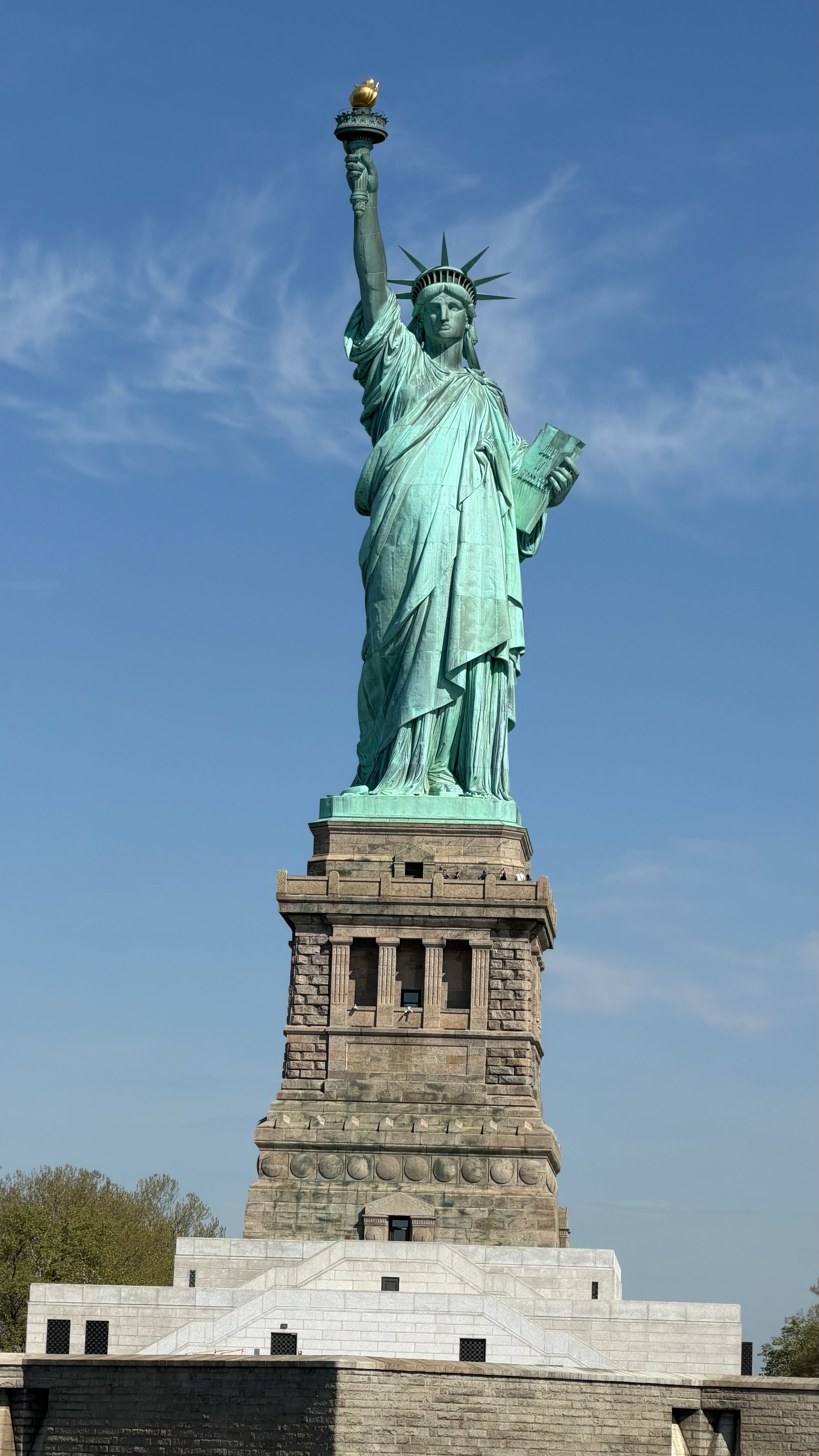
We boarded the ferry for Statue of Liberty and Ellis Island.
I had been before. My husband had not.
And somewhere between the skyline and the harbor, the city stopped feeling like a tourist destination and started feeling like a memory shared by millions of strangers across generations.
As the ferry approached Lady Liberty, I found myself imagining what it must have felt like for immigrants arriving here more than a century ago.
Imagine weeks at sea.
Crowded ships. Illness. Fear. The smell of saltwater mixed with uncertainty.
Many were fleeing war. Others famine. Religious persecution. Poverty. Political violence. Some left because staying meant certain suffering. Others left simply because they wanted their children to have a chance at a different life.
They crossed an ocean chasing something they could barely define but desperately hoped was real.
America.
Not perfect. Never perfect. But possibility.
And then, after all that darkness and open water, they saw her.
The Statue of Liberty rising through the fog like a promise.
For many immigrants, that first glimpse was not just patriotic symbolism. It was emotional survival. It meant maybe the suffering was worth it. Maybe the fear had an ending. Maybe there would finally be work. Food. Safety. Freedom. Maybe their children would not inherit the limitations they themselves had known.
That hope carried entire generations across the Atlantic.
But the story did not end when the ships docked.
For many, Ellis Island became its own kind of trial.
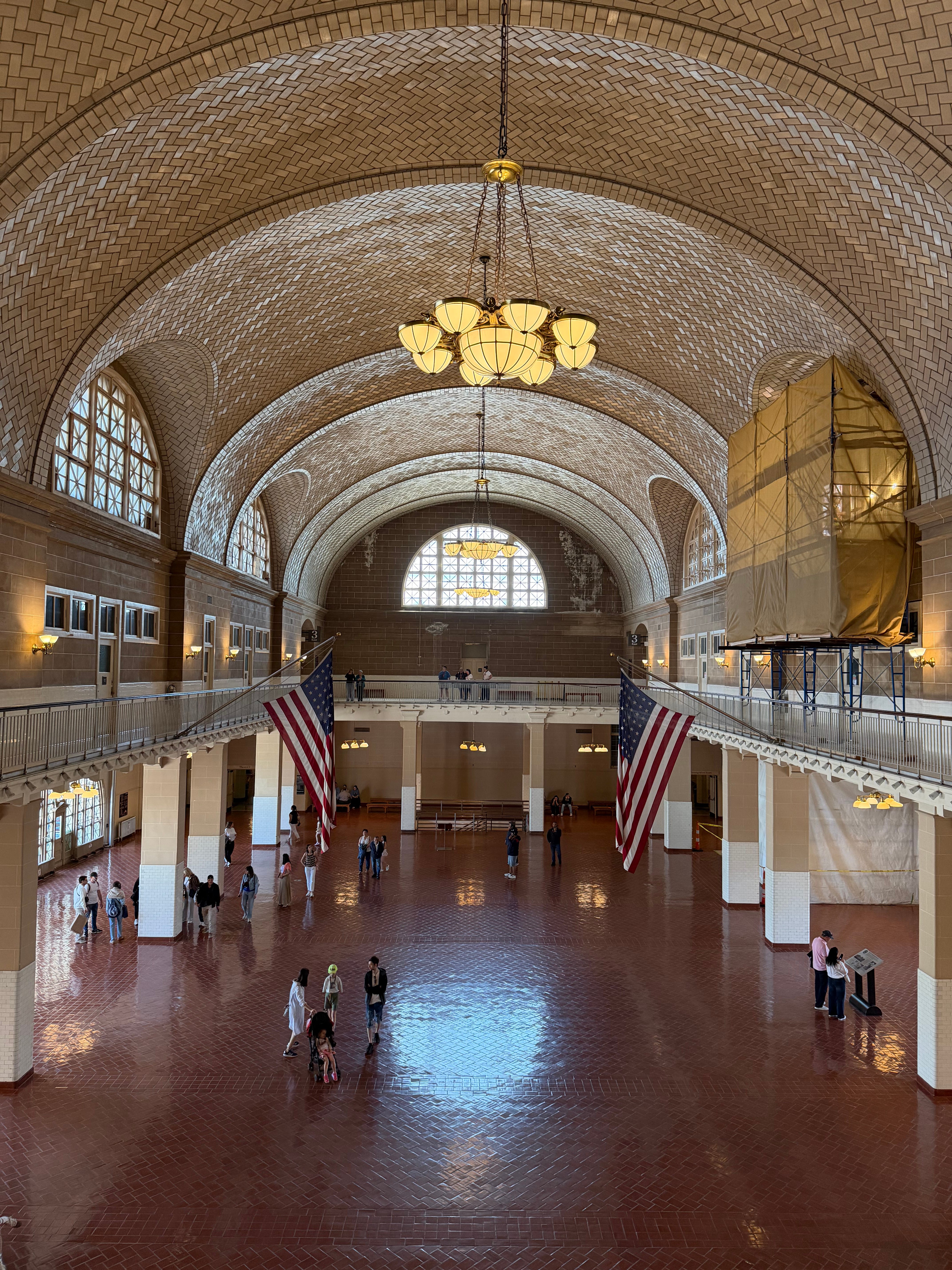
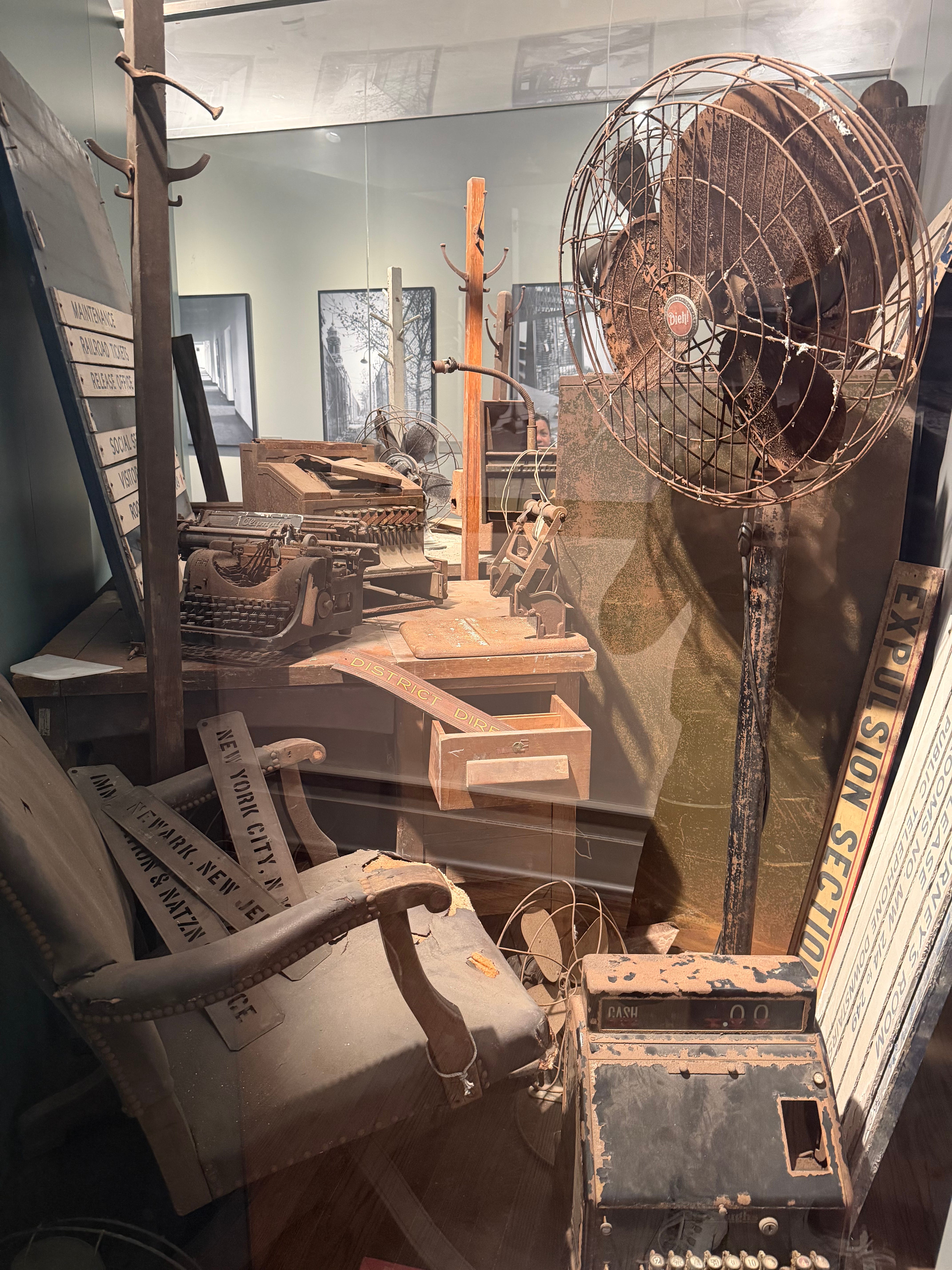
Immigrants underwent medical inspections, legal questioning, identity verification, and exhausting waits in crowded processing halls. Some were separated from family members. Some were quarantined due to illness. Others were detained while officials debated their eligibility to enter the country.
And some, after surviving the entire journey, were sent back.
Imagine that heartbreak.
To come within sight of the dream only to have it taken away at the doorway.
Yet millions did make it through.
They stepped onto American soil carrying little more than suitcases, photographs, family recipes, religious traditions, languages unfamiliar to most Americans, and an almost impossible determination to survive.
They worked brutal factory jobs. Built railroads. Opened grocery stores and bakeries. Worked mines, docks, farms, steel mills, garment factories, and construction sites. They became teachers, police officers, firefighters, nurses, artists, entrepreneurs, and soldiers.
They built neighborhoods.
And because many did not yet speak English or fully understand American systems, they gathered together in communities where they could survive among people who understood them. That is how so many immigrant neighborhoods and borough identities were strengthened and shaped over time. Italian neighborhoods. Irish neighborhoods. Jewish neighborhoods. Chinese neighborhoods. Puerto Rican neighborhoods.
America did not become America despite immigrants.
America became America because of immigrants.
That truth matters right now.
Because today, immigration no longer feels wrapped in the same language of hope that once defined it.
The modern conversation often feels colder. Harder. More suspicious.
Today we see migrants described less as human beings and more as political talking points. Families fleeing violence are sometimes discussed as threats before they are discussed as people. Compassion itself has become politicized in ways that would likely confuse many of the immigrants standing in those Ellis Island lines generations ago.
And to be fair, immigration has never been simple.
Even during the Ellis Island era there was discrimination, racism, exclusion, exploitation, and fearmongering. Certain groups were considered “undesirable.” Entire nationalities faced prejudice. Immigrants were blamed for crime, economic hardship, overcrowding, and cultural change. Sound familiar?
Even gay people, though rarely spoken about publicly in that era, lived under the weight of severe social stigma and moral condemnation. Men and women suspected of homosexuality were often described at the time as “deviants,” “degenerates,” or morally unfit by religious leaders, medical authorities, and much of society. Many concealed their identities completely, fearing arrest, institutionalization, public disgrace, or abandonment by family and community. For LGBTQ immigrants arriving in America, the promise of freedom often existed alongside the painful reality that they still could not safely live as themselves.
History has a way of repeating itself with different accents.
The difference today is that modern technology amplifies fear faster than empathy.
We now experience immigration through viral clips, political branding, outrage cycles, and algorithm-driven narratives designed to keep people angry. That makes it harder to see the individual human being standing inside the larger issue.
The mother carrying her child.
The man escaping political violence.
The teenager hoping to attend school safely.
The family trying to survive long enough to begin again.
None of this means borders should not exist. Nations absolutely have the right and responsibility to maintain lawful immigration systems, vet applicants, ensure security, and manage resources responsibly.
But humanity and security are not opposites.
A country can protect its borders without losing its soul.
That is the real test of America.
Not whether we have immigration laws.
Every nation does.
The test is whether we can enforce those laws while still recognizing human dignity.
Whether we can remember that many of our own ancestors once stood in those same uncertain spaces, terrified and hopeful at the same time.
Because unless you are Native American, somewhere in your family story, someone came from somewhere else.
Someone arrived frightened.
Someone spoke with an accent.
Someone was viewed as “other.”
Someone hoped America would give them a chance.
And despite everything happening now, I do not believe the American Dream is dead.
Bruised? Yes.
Strained? Absolutely.
Sometimes obscured beneath politics, fear, and division? Without question.
But not dead.
You can still feel it in New York City.
You can feel it walking through Manhattan hearing dozens of languages in a single afternoon. You can feel it in family-owned restaurants built from sacrifice and long workdays. You can feel it in first-generation college students. In immigrant business owners. In exhausted parents working double shifts so their children might have choices they never had themselves.
The dream survives because people keep carrying it forward.
America at its best has never been about purity or sameness.
It has always been about reinvention.
About imperfect people arriving from imperfect places and attempting, together, to build something larger than themselves.
That experiment is messy. Sometimes painful. Sometimes hypocritical. Sometimes deeply unjust.
But it is still unfinished.
And standing there in New York Harbor, watching tourists take photographs while ferries crossed the water beneath Lady Liberty’s gaze, I realized something important.
The statue is not only a monument to the past.
It is a question directed at every generation that follows.
Who are we now?
Are we still the country that believes human beings deserve possibility?
Are we still capable of empathy strong enough to survive politics?
Are we still brave enough to believe that welcoming others can strengthen rather than weaken us?
I hope the answer is yes.
Because the American Dream was never supposed to belong only to the people who got here first.
It was supposed to remain alive for whoever arrived next.
Words can still move the world. Read mine → https://substack.com/@jhirwin