



By J. H. Irwin
Author | Storyteller | Capturing Life, Memory, and Meaning
My first reaction was not one I am particularly proud of
It was relief.
Not because another human being had died, but because I immediately thought about the years he devoted to defending Donald Trump, excusing cruelty, and supporting policies that, in my view, caused immeasurable harm to millions of people. I thought about immigrants. LGBTQ+ families. Women. Political opponents. Public servants. People whose dignity often seemed negotiable if political power could be preserved.
That was where my mind went first.
Then I stopped.
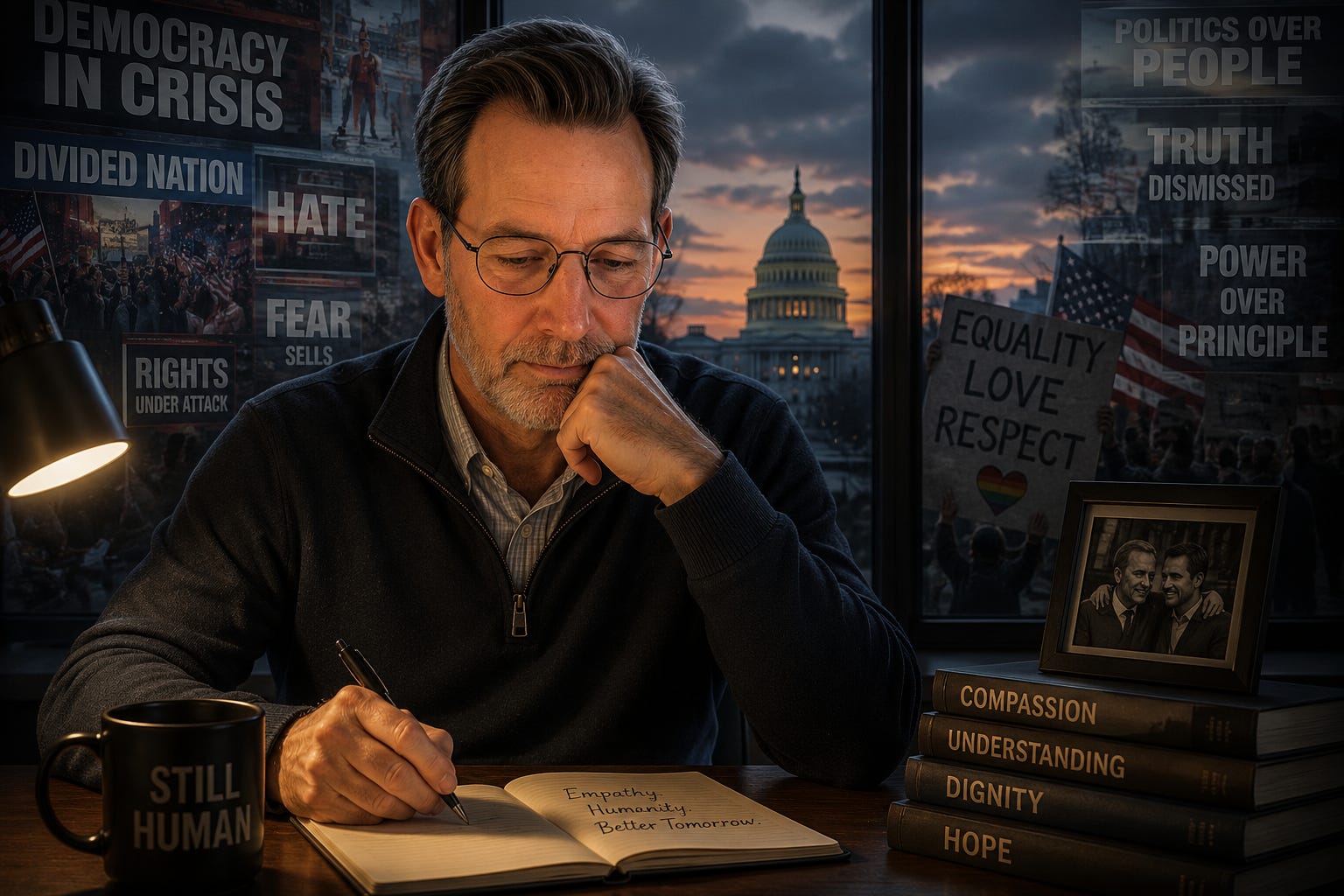
I have spent years writing about empathy. About humanity. About seeing the person behind the politics. About resisting the temptation to divide the world into heroes and villains. If those beliefs only apply to people I already agree with, then they are not principles at all. They are preferences.
That realization is uncomfortable.
Lindsey Graham was not always the man history will likely remember. There was a time when he stood beside John McCain, a Republican with whom I often disagreed politically but respected because he demonstrated that loyalty to country mattered more than loyalty to one man. Graham once spoke with admiration about Joe Biden, describing him as one of the finest people he had ever known in public life. Republicans and Democrats fought fiercely over policy while still recognizing one another’s humanity.
Somewhere along the way, that changed.
Perhaps only Lindsey Graham truly knew why.
Power changes people. Fear changes people. Ambition changes people. Sometimes survival changes people. Whatever the reason, the man who eventually emerged became, to many Americans, the embodiment of political surrender. Whether that judgment is entirely fair is for history to decide, but it is undeniably how countless people experienced his public life.
That experience has consequences.
There are families who genuinely believe that decisions supported by Senator Graham made their lives less safe. There are LGBTQ+ Americans who watched leaders diminish their marriages and question their existence. There are immigrants who lived with fear. Women who feared losing autonomy over their own bodies. Civil servants who watched institutions they trusted become objects of ridicule. Whether one agrees with every criticism or not, the pain felt by those communities is real.
It is difficult to ask people carrying those wounds to immediately respond with grace.
The truth is, I don’t know that I can.
I would like to believe I can separate the man from his choices, but those choices affected real people. They were not abstract votes cast in the quiet of a Senate chamber. They rippled outward into millions of homes, conversations, fears, and lives. The damage many perceive was deeply personal.
That is why my first reaction was not compassion.
It was judgment.
Yet judgment alone leaves us trapped in the very cycle I have spent years trying to escape.
Empathy does not require pretending harmful actions never happened. Forgiveness does not erase accountability. Extending humanity to someone does not mean celebrating their choices or rewriting history to make ourselves more comfortable.
We can acknowledge that a life has ended while also acknowledging that many people were hurt by what that life represented.
Both things can be true.
Perhaps that is the lesson I keep returning to.
The greatest test of our character is rarely how we treat people who make our lives easier. It is how we respond to those who challenge everything we believe. That does not mean abandoning our principles. It means refusing to let someone else’s lack of compassion become permission for us to abandon our own.
I am still wrestling with that today.
I cannot honestly say I mourn Senator Lindsey Graham in the traditional sense. I mourn something larger.
I mourn the version of American public life where fierce opponents could still recognize goodness in one another. I mourn the friendships that once crossed party lines. I mourn the belief that character mattered more than loyalty. I mourn the loss of leaders willing to tell uncomfortable truths, even when those truths carried political consequences.
Most of all, I mourn what years of division have done to all of us.
Because if my first instinct upon hearing of another person’s death is satisfaction instead of sadness, then I have been wounded by this era as well.
That does not absolve those who helped create it.
But it reminds me that preserving my own humanity is ultimately my responsibility.
That may be the hardest lesson of all.
Words can still move the world. Read mine → https://substack.com/@jhirwin