


By J. H. Irwin
Author | Storyteller | Capturing Life, Memory, and Meaning
There are moments when the law intersects with something so personal, so deeply lived, that it stops being abstract.
This is one of those moments.
When I saw the headlines about the Supreme Court and conversion therapy, I did not experience it as policy or precedent. I felt it in a place much older than that. A place shaped long before I had language for who I was, when survival meant learning how to appear acceptable in a world that quietly demanded it.
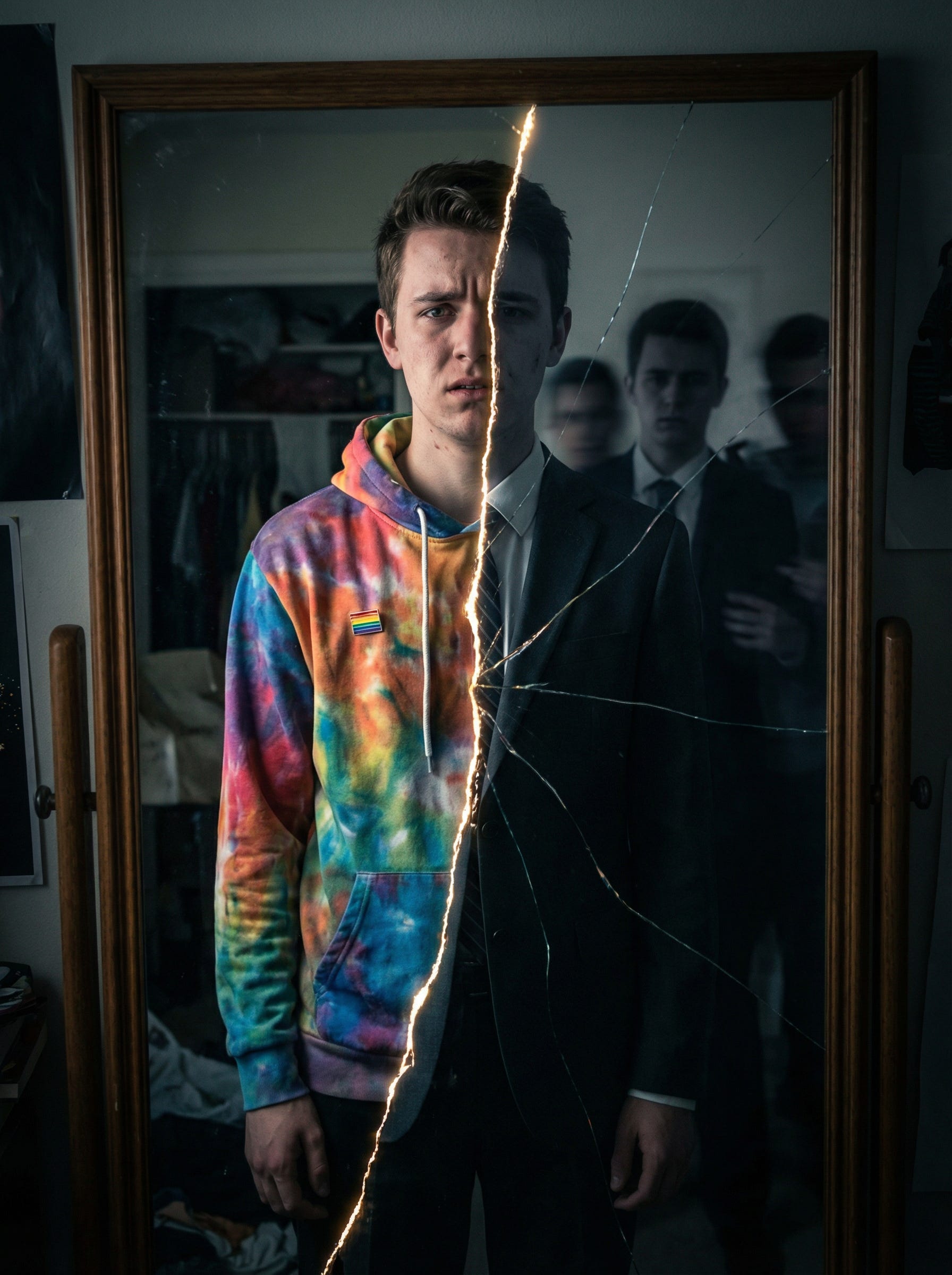
I have never sat in a therapist’s office for conversion therapy, but I know what it is to try and convert yourself.
To negotiate with your own identity.
To believe that discipline, repetition, or faith might be enough to reshape something that was never broken.
To carry that effort in silence, because the alternative feels like losing everything.
That experience does not leave you cleanly. It settles into your nervous system. It shows up in your body. It follows you into adulthood in ways that are difficult to explain to anyone who has not lived it.
So when we talk about this ruling, I am not approaching it from a distance.
I am approaching it as someone who understands, intimately, what it means to try and become someone else just to feel safe.
What Happened
In Chiles v. Salazar, the Supreme Court of the United States struck down Colorado’s ban on conversion therapy for minors.
The Court ruled that the law violated the First Amendment, arguing that talk therapy is protected speech and that the state cannot restrict it based on viewpoint.
What This Ruling Does
Weakens state bans that restrict conversion therapy through speech
Opens the door for legal challenges to similar laws nationwide
Forces states to rethink how they regulate therapy, focusing on conduct rather than conversation
What This Ruling Does Not Do
It does not validate conversion therapy as legitimate or safe
It does not require therapists to offer it
It does not automatically overturn all existing bans
But it does remove a layer of protection that many believed was settled.
Why This Matters
Conversion therapy is widely rejected by medical and psychological communities because of its harm.
But harm does not always begin in a clinical office.
For many, it begins internally.
I did not need a therapist to attempt conversion.
I learned early how to perform what was expected.
To follow a script that never felt real.
To convince others, and try to convince myself, that I could become something I was not.
That effort did not fix anything.
It created distance between who I was and who I believed I needed to be.
The Reality Behind the Law
This case may be framed as a question of free speech.
But in real life, it is about something more fragile.
It is about what happens when authority, whether legal, cultural, or religious, tells someone that their identity is a problem to be solved.
Because those messages do not stay external.
They become internal.
And once they do, they are hard to silence.
The Final Take…
The Supreme Court did not endorse conversion therapy.
But it made it harder to prohibit.
And for those who have lived through even a version of it, whether imposed or self-inflicted, that distinction matters.
Because the damage was never just about what was said.
It was about what was believed.