


By J. H. Irwin
Author | Storyteller | Exploring the Human Experience Through Words
Everyone has a story.
Not all of us write it down, but it’s there. A long thread of moments, memories, choices, and scars. And while we live our stories every day, writing them is a different kind of power. It gives us distance, clarity, and a way to take control. It can be healing. It can be freeing.
For me, writing wasn’t about becoming an author. It started with needing a place to put the things I couldn’t say out loud. A notebook, a keyboard, a quiet room, that’s all it took. And over time, what began as emotional scribbles turned into understanding. The more I wrote, the more I figured myself out.
Why Write Your Story?
Because it helps you own it. Life isn’t always something we feel in control of, especially when we’re dealing with trauma, regret, or confusion. Writing gives shape to the chaos. It turns events into narrative, pain into process. Once it’s on the page, it’s not just something that happened to you it’s something you’ve processed. You’ve survived it. You’re telling it now.
Journaling: Where It Starts
You don’t need a plan. You don’t need good grammar. Journaling is raw and personal. It’s where you write without filters… fears, hopes, random thoughts, angry rants, soft prayers. It’s where you’re honest, because no one else needs to read it.
Set a timer for 10 minutes a day. Write what you’re feeling. Write what’s on your mind. Don’t stop to edit. Don’t try to make it pretty. You’re not performing you’re clearing space inside yourself.
Memoir: Making Sense of the Past
A memoir is a step beyond journaling. It’s still personal, but with structure and intention. You look back, not just to remember, but to understand. You pick moments that shaped you. You follow the thread. You find the meaning.
Writing a memoir isn’t about telling everything. It’s about telling what matters. That one summer. That decision. That loss. That turning point. You zoom in, reflect, and tell the truth not just about what happened, but what it meant to you.
Creative Expression: The Power of Fiction and Poetry
Sometimes, the truth is too sharp to write directly. That’s where creativity steps in. Fiction lets you build a world that mirrors your own, characters that carry pieces of you, situations that explore your feelings. Poetry lets you distill emotion into a few clear lines. These forms let you speak sideways, in symbols, in stories. But they’re still honest.
Letting Go Through Writing
Writing your story doesn’t erase the pain, but it puts it somewhere. It stops it from spinning endlessly in your head. It gives you perspective. It reminds you that you are not stuck, you are moving. Every sentence is a step forward.
You don’t need to publish it. You don’t even need to show anyone. Just write it. For yourself. For your sanity. For closure. For freedom.
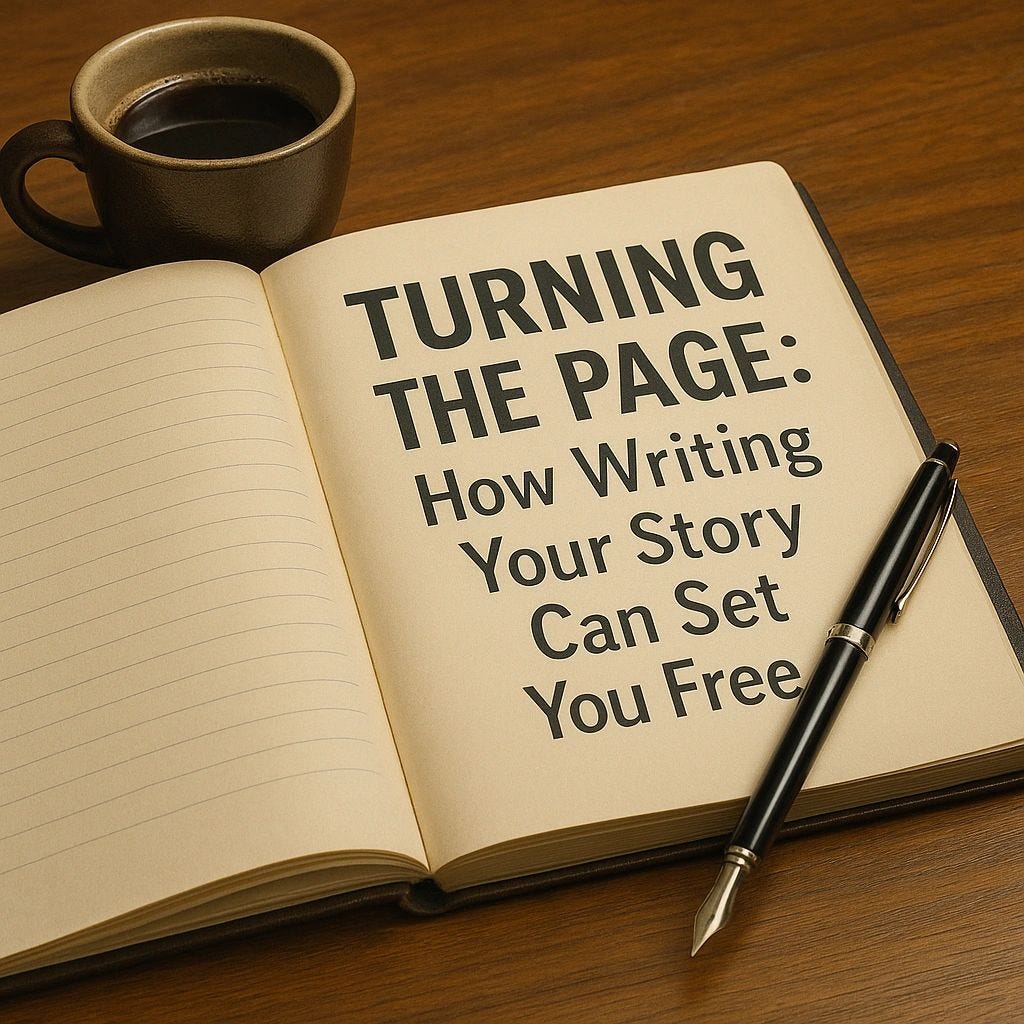
Because writing isn’t just telling your story. It’s reclaiming it. And sometimes, that’s all it takes to start again… turning the page.