


By J. H. Irwin
Author | Content Creator | Humanitarian Voice | Pro-Democracy & Human Rights Advocate
Grief does not treat everyone the same. Some people mourn and slowly regain their footing. Others remain suspended in the moment of loss, unable to step fully back into life. This is for those still trying to find their way out of that long shadow.
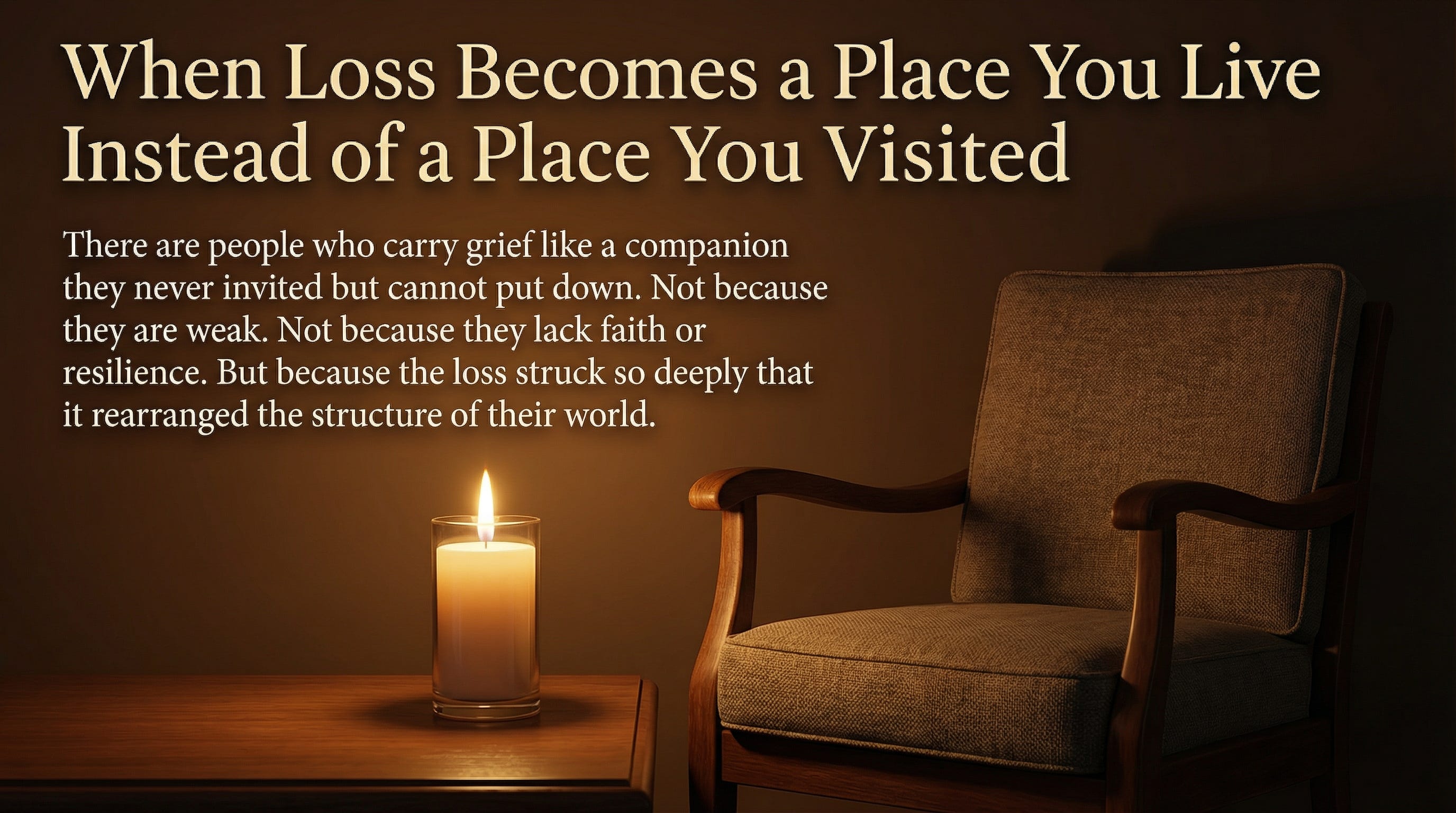
There are people who carry grief like a companion they never invited but cannot put down. Not because they are weak. Not because they lack faith or resilience. But because the loss struck so deeply that it rearranged the structure of their world.
For some, the holidays intensify that paralysis. Traditions feel broken. Memories overwhelm. The absence becomes so tangible it almost feels like its own presence. And year after year, they remain stuck, unable to rebuild the rhythm of their lives.
This happens far more often than most admit.
The Unspoken Reality of Stalled Grief
We honor the dead, but we rarely talk about what happens to the living. There are those who stop answering invitations, who avoid gatherings, who shut down emotionally because opening up hurts too much. There are people who function on the surface but remain internally frozen, unable to imagine a future where the loss is not the center of everything.
This stuckness is not chosen. It is not a character flaw. It is the human heart trying to protect itself from repeating the deepest wound it has ever felt.
But protection can become a prison.
When Love Turns into Self-Abandonment
Those who cannot move forward often believe they are keeping faith with the person they lost. If they let go of the pain, they fear they are letting go of the person. If they begin to feel joy, they fear they are betraying the memory.
Yet grief was never meant to replace the life still in front of us. The people we lose do not ask us to shrink, stop, or surrender our own lives in tribute to theirs. They loved us for who we were when they were here. That love does not transform into a demand for a lifetime of sorrow.
Continuing to live does not dishonor them. It carries them forward.
Recognizing the Silent Warning Signs
If you are someone who has not moved forward, or you love someone who has been frozen by loss, here are some quiet truths:
You deserve more life than the day you lost them.
You are allowed to imagine a future that feels whole again.
You are allowed to rebuild meaning.
And you are allowed to grow beyond the moment that broke you.
Grief takes time. But it should not take all your time.
A Difficult Kind of Hope
The goal is not to forget. The goal is to reclaim.
Reclaim the days. Reclaim the friendships. Reclaim the sense that you are still worthy of happiness, purpose, and connection. Reclaim the understanding that love is not limited to what you once had; it can continue to evolve even in the wake of loss.
Healing is not betrayal.
Healing is survival.
And survival is a quiet form of honoring those who shaped you. You are their legacy, not their monument. You are meant to live.
To Anyone Still Struggling to Step Back into Life
If you are stuck, you’re not alone. Many carry grief that turned into a weight they can’t seem to set down. But there is life waiting for you beyond this moment. Not a perfect life. Not the life you had before. But a real one. A meaningful one. A life with room for memory and room for joy.
Let this season be more than a reminder of what was lost. Let it be a whisper that you still belong among the living.